EN
EN



When businesses invest in lighting infrastructure, selecting the right commercial LED lights for indoors becomes a critical decision that impacts operational efficiency, employee productivity, and long-term costs. Modern commercial spaces require lighting solutions that deliver consistent performance, energy efficiency, and durability while meeting specific workplace requirements. Understanding the key factors involved in choosing appropriate commercial lighting systems helps organizations make informed decisions that align with their operational goals and budget constraints.

Essential Performance Characteristics of Commercial LED Lighting
Light Output and Distribution Requirements
Professional commercial environments demand precise light distribution to ensure adequate illumination across work areas without creating uncomfortable glare or shadows. Quality LED fixtures should provide uniform light distribution with appropriate lumen output for specific applications, whether in offices, retail spaces, or industrial facilities. The beam angle and optical design significantly influence how effectively light reaches intended surfaces and contributes to overall visual comfort for occupants.
Businesses must evaluate their specific lighting requirements based on task complexity, ceiling height, and space configuration. Different commercial applications require varying levels of illumination, measured in foot-candles or lux, to meet industry standards and safety regulations. Understanding these metrics helps ensure selected fixtures will provide adequate lighting performance for intended uses while maintaining energy efficiency throughout their operational lifespan.
Color Temperature and Quality Considerations
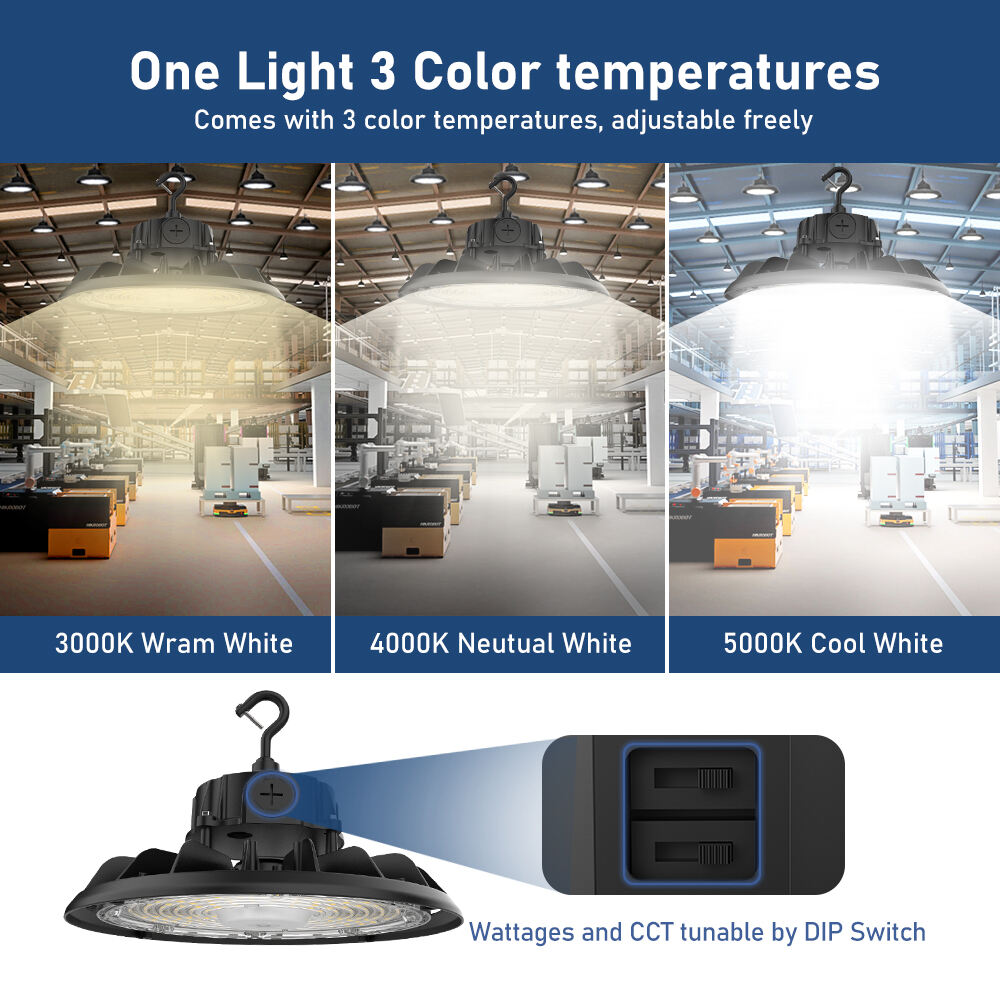
Color temperature selection plays a crucial role in creating appropriate work environments and supporting employee well-being. Commercial LED lights typically offer color temperatures ranging from warm white (3000K) to daylight (5000K-6500K), with each option creating different atmospheric effects and supporting various activities. Cooler temperatures generally enhance alertness and concentration in task-oriented environments, while warmer tones create more comfortable settings for collaborative spaces.
Color rendering index (CRI) represents another important quality factor that affects how accurately colors appear under artificial lighting. High-quality commercial LED fixtures should provide CRI ratings of 80 or higher to ensure colors appear natural and vibrant. This characteristic becomes particularly important in retail environments, healthcare facilities, and other applications where accurate color perception impacts performance or customer experience.
Energy Efficiency and Operational Cost Analysis
Power Consumption and Utility Savings
Energy efficiency represents one of the primary advantages of modern LED technology, with quality fixtures consuming significantly less power than traditional fluorescent or incandescent alternatives. Businesses can typically achieve 50-75% energy savings by upgrading to efficient commercial LED lights for indoors, resulting in substantial utility cost reductions over the fixture lifetime. These savings compound over time, making LED technology increasingly cost-effective despite higher initial investment requirements.
Understanding wattage requirements and efficacy ratings helps businesses compare different fixture options and calculate potential energy savings. LED efficacy, measured in lumens per watt, indicates how efficiently fixtures convert electrical energy into visible light. Higher efficacy ratings translate to greater energy savings and reduced environmental impact, making this metric essential for evaluating long-term operational costs and sustainability goals.
Maintenance and Replacement Cost Factors
LED technology offers significant advantages in maintenance cost reduction due to extended operational lifespans and reduced failure rates compared to traditional lighting technologies. Quality commercial LED fixtures typically provide 50,000 to 100,000 hours of operation, substantially reducing replacement frequency and associated labor costs. This longevity becomes particularly valuable in commercial applications where fixture access requires specialized equipment or disrupts normal operations.
Businesses should consider total cost of ownership when evaluating lighting options, including initial purchase price, installation costs, energy consumption, and maintenance requirements. While LED fixtures may require higher upfront investment, the combination of energy savings, reduced maintenance needs, and extended lifespan typically results in lower total costs over the fixture lifetime. Calculating return on investment helps justify initial expenditure and supports informed decision-making.
Installation and Compatibility Considerations
Fixture Mounting and Ceiling Integration
Commercial spaces often feature specific ceiling systems and architectural constraints that influence fixture selection and installation requirements. Troffer-style LED fixtures designed for drop ceiling installations must match standard grid dimensions and provide secure mounting methods. Surface-mounted options offer flexibility for solid ceiling applications but require appropriate structural support and may involve different aesthetic considerations.
Professional installation ensures proper fixture mounting, electrical connections, and compliance with local building codes and safety regulations. Qualified electricians can assess existing electrical infrastructure, recommend necessary upgrades, and ensure installations meet warranty requirements. Proper installation also maximizes fixture performance, safety, and longevity while minimizing potential maintenance issues or operational disruptions.
Electrical System Compatibility and Control Integration
Modern commercial LED fixtures often include advanced control capabilities that enhance energy efficiency and user convenience through dimming, scheduling, and sensor integration. However, these features require compatible electrical systems and control infrastructure to function properly. Businesses should evaluate existing electrical capacity, control systems, and future expansion needs when selecting LED fixtures with integrated smart features.
Dimming compatibility represents a critical consideration, as not all LED fixtures work properly with existing dimmer switches or control systems. Driver technology, circuit design, and control protocols must align to ensure smooth operation and prevent flickering, reduced lifespan, or other performance issues. Consulting with lighting professionals helps ensure selected fixtures integrate properly with existing or planned control systems.
Quality Standards and Certification Requirements
Safety and Performance Certifications
Reputable commercial LED manufacturers obtain third-party certifications that verify fixture safety, performance, and quality standards. UL listing, FCC compliance, and Energy Star certification indicate products meet established safety and performance criteria. These certifications provide assurance that fixtures undergo rigorous testing and meet industry standards for electrical safety, electromagnetic compatibility, and energy efficiency.
DLC (DesignLights Consortium) qualification represents another important certification for commercial LED fixtures, particularly for businesses seeking utility rebates or participating in energy efficiency programs. DLC-qualified products meet strict performance criteria and often qualify for financial incentives that help offset initial investment costs. Verifying certification status helps ensure selected fixtures meet quality standards and may provide access to cost-saving programs.
Warranty Coverage and Manufacturer Support
Comprehensive warranty coverage reflects manufacturer confidence in product quality and provides protection against premature failure or performance degradation. Quality commercial LED fixtures typically include warranties covering both fixture components and LED performance over specified time periods. Understanding warranty terms, coverage limitations, and claim procedures helps protect investment and ensures access to manufacturer support when needed.
Manufacturer reputation, technical support availability, and local service capabilities influence long-term satisfaction and operational reliability. Established manufacturers with proven track records typically provide better support resources, replacement part availability, and technical assistance. Evaluating manufacturer credentials and support infrastructure helps ensure ongoing access to necessary services throughout the fixture lifetime.
Application-Specific Selection Criteria
Office and Administrative Environment Requirements
Office environments require lighting solutions that support various activities including computer work, document reading, and collaborative meetings. Commercial LED lights for these applications should provide uniform illumination with minimal glare and appropriate color temperature to enhance productivity and visual comfort. Fixtures with high-quality diffusers and precise optical control help create comfortable working conditions while minimizing eye strain and fatigue.
Modern office designs often emphasize open concepts and flexible workspace arrangements that benefit from adaptable lighting solutions. LED fixtures with dimming capabilities and control integration allow occupants to adjust lighting levels according to task requirements and personal preferences. This flexibility supports diverse work activities and contributes to overall employee satisfaction and productivity.
Retail and Customer-Facing Space Considerations
Retail environments demand lighting solutions that enhance merchandise presentation while creating inviting atmospheres for customers. High CRI ratings become particularly important in these applications to ensure products appear attractive and colors render accurately. Strategic lighting placement and beam control help highlight featured merchandise while providing adequate general illumination throughout the space.
Customer comfort and visual appeal directly impact sales performance, making lighting quality a critical business consideration. Commercial LED fixtures offer consistent light output and color stability that traditional technologies cannot match, ensuring merchandise presentation remains consistent throughout operating hours. Energy efficiency benefits become particularly valuable in retail applications with extended operating schedules and high lighting demands.
FAQ
How long do commercial LED lights typically last in indoor applications
Quality commercial LED fixtures typically provide 50,000 to 100,000 hours of operation in indoor applications, which translates to 10-20 years of normal use depending on operating schedules. This extended lifespan significantly exceeds traditional fluorescent or incandescent alternatives, resulting in reduced maintenance costs and fewer disruptions from fixture replacement. Actual lifespan depends on operating conditions, quality of components, and proper installation practices.
What color temperature works best for office environments
Most office environments benefit from color temperatures between 4000K and 5000K, which provide neutral to cool white light that enhances alertness and concentration. This range supports computer work and document reading while maintaining visual comfort throughout extended work periods. Some applications may benefit from tunable white technology that allows color temperature adjustment based on time of day or specific activities.
Do commercial LED lights require special dimmer switches
Many commercial LED fixtures require compatible dimmer switches specifically designed for LED technology to function properly. Traditional incandescent dimmers may cause flickering, reduced lifespan, or other performance issues with LED fixtures. Manufacturers typically provide compatibility lists or recommendations for appropriate dimmer switches that ensure smooth operation and maintain warranty coverage.
How much can businesses save by switching to LED lighting
Businesses typically achieve 50-75% energy savings by upgrading to efficient LED lighting compared to traditional fluorescent or incandescent systems. Total savings depend on existing fixture types, operating schedules, local utility rates, and selected LED products. When combined with reduced maintenance costs and extended fixture lifespans, most commercial LED upgrades provide positive return on investment within 2-5 years of implementation.