EN
EN



Municipal lighting projects represent one of the largest ongoing operational expenses for local governments worldwide. From parking lots and roadways to parks and civic centers, the cost of keeping public spaces illuminated around the clock adds up to millions of dollars in energy bills each year. The question many city planners and procurement managers are now asking is whether switching to a modern led area light can meaningfully reduce those costs — not just in theory, but in practical, measurable terms.
The short answer is yes — but the full picture is more nuanced than a simple product swap. Understanding how a led area light achieves energy savings, what conditions make those savings most significant, and how municipalities can realistically plan for a return on investment requires a careful look at the technology, operational context, and financial planning involved. This article breaks down all of those factors so decision-makers can evaluate the opportunity with clarity and confidence.
The Energy Consumption Problem in Municipal Lighting
Why Traditional Lighting Is So Costly
For decades, municipalities relied heavily on high-pressure sodium (HPS) and metal halide fixtures for outdoor area lighting. These technologies were the best available at the time, but they carry significant inefficiencies by today's standards. A single HPS fixture used in a parking lot or street corridor can consume between 250 and 1000 watts depending on the application, and these fixtures often operate for 10 to 14 hours per night.
When you multiply that wattage across hundreds or thousands of fixtures installed across a city, the cumulative energy draw becomes enormous. Municipal governments in mid-sized cities can spend anywhere from hundreds of thousands to several million dollars annually on public lighting electricity alone. That figure does not include the separate cost of lamp replacements, ballast maintenance, and labor — all of which add to the total burden on public budgets.
Beyond cost, older lighting technologies also suffer from poor lumen maintenance over time. A HPS lamp that starts at a certain output level will depreciate significantly within its rated lifespan, meaning that municipalities are often paying full energy costs to run fixtures that deliver increasingly poor illumination quality.
The Scale Problem in Municipal Deployments
Municipal lighting projects differ from commercial or private installations in one critical way: scale. When a business upgrades a single parking lot, the savings are real but contained. When a city upgrades hundreds of street and area lighting points, every percentage improvement in efficiency is multiplied across the entire infrastructure.
This scale factor means that even a modest reduction in wattage per fixture — say, cutting from 400 watts to 150 watts — translates into millions of kilowatt-hours saved over a year across a city-wide deployment. The larger the network of fixtures, the more compelling the case for transitioning to a more efficient led area light solution becomes from both a financial and sustainability standpoint.
How a LED Area Light Achieves Energy Reduction
Superior Luminous Efficacy
The core reason a led area light saves energy compared to conventional alternatives is luminous efficacy — a measure of how many lumens of visible light are produced per watt of electrical power consumed. Modern LED technology has advanced dramatically, with high-quality led area light fixtures now achieving efficacies of 130 to 160 lumens per watt or higher. Traditional HPS sources typically deliver 80 to 100 lumens per watt under ideal conditions.
This means an led area light can produce the same or greater light output while consuming significantly less power. In practical terms, a led area light rated at 150 watts can often replace a 400-watt HPS fixture with equivalent or superior illumination on the ground. That direct wattage reduction is the primary driver of energy cost savings in any municipal retrofit or new installation project.
Efficacy improvements also mean that fewer fixtures may be needed to achieve the same lighting uniformity across a given area. Better optical design in modern led area light products allows light to be directed precisely where it is needed, reducing waste and improving coverage patterns compared to omnidirectional sources like HPS lamps.
Directional Light Output and Reduced Waste
Unlike traditional light sources that emit light in all directions — requiring reflectors to redirect a portion of that light downward — a led area light is inherently directional. LEDs emit light in a defined hemispherical pattern, and with precision optics, the output can be shaped and aimed to maximize useful illumination on roads, parking surfaces, and public areas.
This directionality eliminates what is commonly called 'optical loss' in traditional fixtures, where a significant percentage of the generated light is absorbed by the fixture housing, reflected multiple times, or scattered upward as light pollution rather than reaching the intended target. By delivering more of the generated lumens where they are actually needed, a led area light system achieves effective illumination at lower total wattage.
For municipal planners, this has a direct financial implication: meeting the required illuminance levels set by local or national lighting standards can often be accomplished with fewer watts, fewer fixtures, or both. Either path leads to lower energy consumption and reduced costs on the electricity bill.
Dimming Capability and Smart Controls Integration
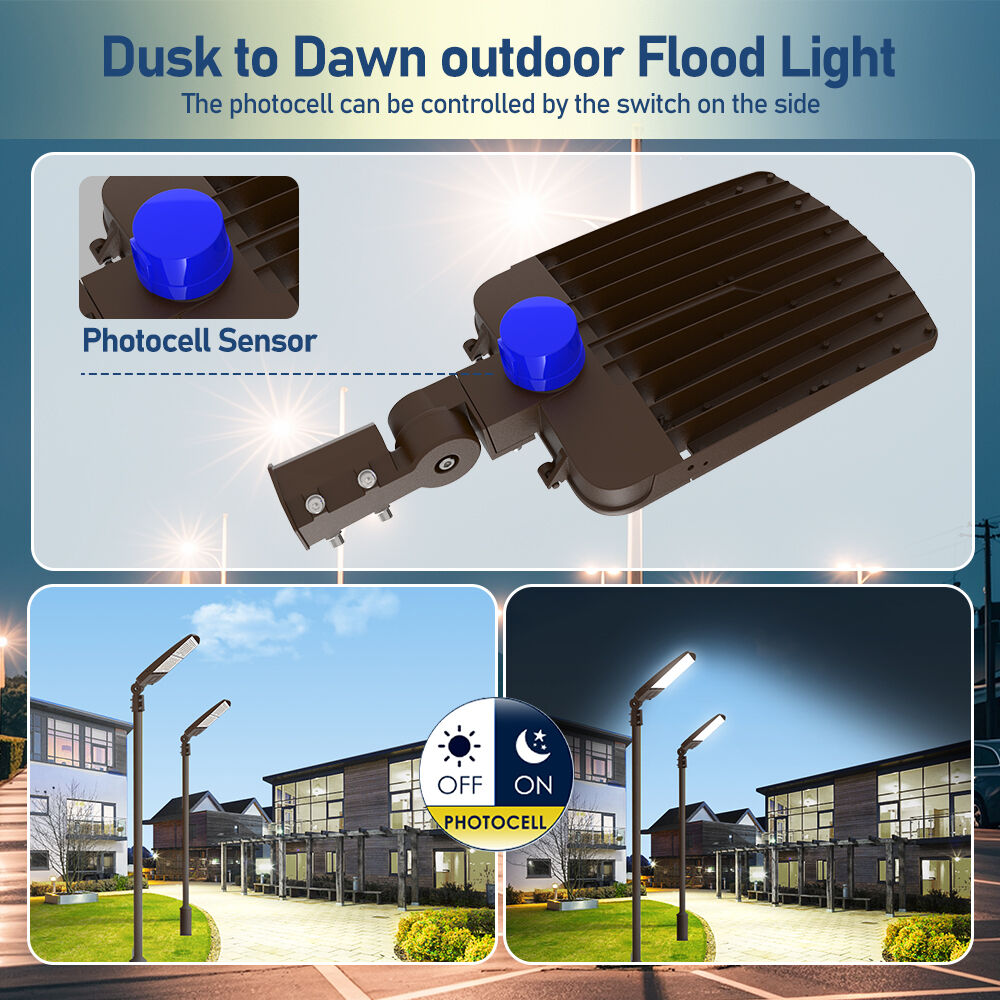
One of the most powerful — yet often underutilized — features of a led area light in municipal applications is its compatibility with dimming and smart lighting controls. Unlike HPS or metal halide lamps, which cannot be dimmed without significant performance penalties, LED technology supports smooth dimming across a wide range without affecting lamp life or color quality.
This capability allows municipalities to implement adaptive lighting schedules. During peak evening hours when pedestrian and vehicle traffic is highest, the led area light can operate at full output. After midnight or during low-activity periods, the system can automatically reduce output to 50 percent or lower, cutting energy consumption in half during those hours without any compromise to safety standards.
Some advanced implementations integrate occupancy sensors or networked control platforms that allow real-time monitoring and adjustment of individual fixtures or zones. For a municipal lighting project covering a large geographic area, this level of control can yield additional energy savings of 20 to 40 percent beyond the base reduction achieved simply by replacing old technology with a led area light.
Financial Modeling for Municipal LED Retrofits
Calculating the Real Cost Reduction
When municipalities evaluate the financial case for deploying a led area light across their infrastructure, the analysis must account for several variables: the current energy cost per kilowatt-hour, the number of operating hours per year, the wattage difference between existing and replacement fixtures, and any applicable utility rebates or incentive programs.
As a general illustration, consider a scenario where a city operates 1,000 area lighting fixtures averaging 400 watts each, running for 4,000 hours per year. The annual energy consumption for that network is 1,600,000 kilowatt-hours. At an average industrial electricity rate of $0.10 per kWh, that represents $160,000 per year in energy costs. Replacing each fixture with a led area light averaging 150 watts would reduce annual consumption to 600,000 kWh — saving $100,000 annually from energy alone.
That figure improves further when maintenance savings are added. LED fixtures have rated lifespans of 50,000 to 100,000 hours or more, compared to 15,000 to 24,000 hours for HPS lamps. Fewer replacements, fewer service visits, and lower labor costs for a municipal maintenance crew add tangible value to the total cost equation. In many documented municipal retrofits, the combined energy and maintenance savings allow a full return on investment within three to seven years.
Understanding the Role of Incentives and Rebates
Many utility companies and government programs offer financial incentives for switching to energy-efficient lighting, including rebates on led area light products and sometimes direct co-funding for large-scale public sector projects. These programs are designed to reduce grid demand and support sustainability goals, and they can significantly shorten the payback period for a municipal upgrade project.
Municipal procurement teams should investigate available incentive structures early in the planning process. Rebate amounts vary by region and program but can offset anywhere from 10 to 30 percent of the upfront equipment cost for qualifying led area light installations. In some jurisdictions, low-interest financing programs specifically for public sector energy efficiency projects are also available, making it possible to fund the upgrade from projected energy savings without a large upfront capital expenditure.
The combination of high energy savings, long equipment life, and available incentives makes the financial case for adopting a led area light in municipal projects compelling. However, achieving the best outcomes requires careful selection of fixture specifications, attention to installation quality, and a commitment to ongoing monitoring of system performance.
Application Suitability Across Municipal Contexts
Parking Lots and Civic Spaces
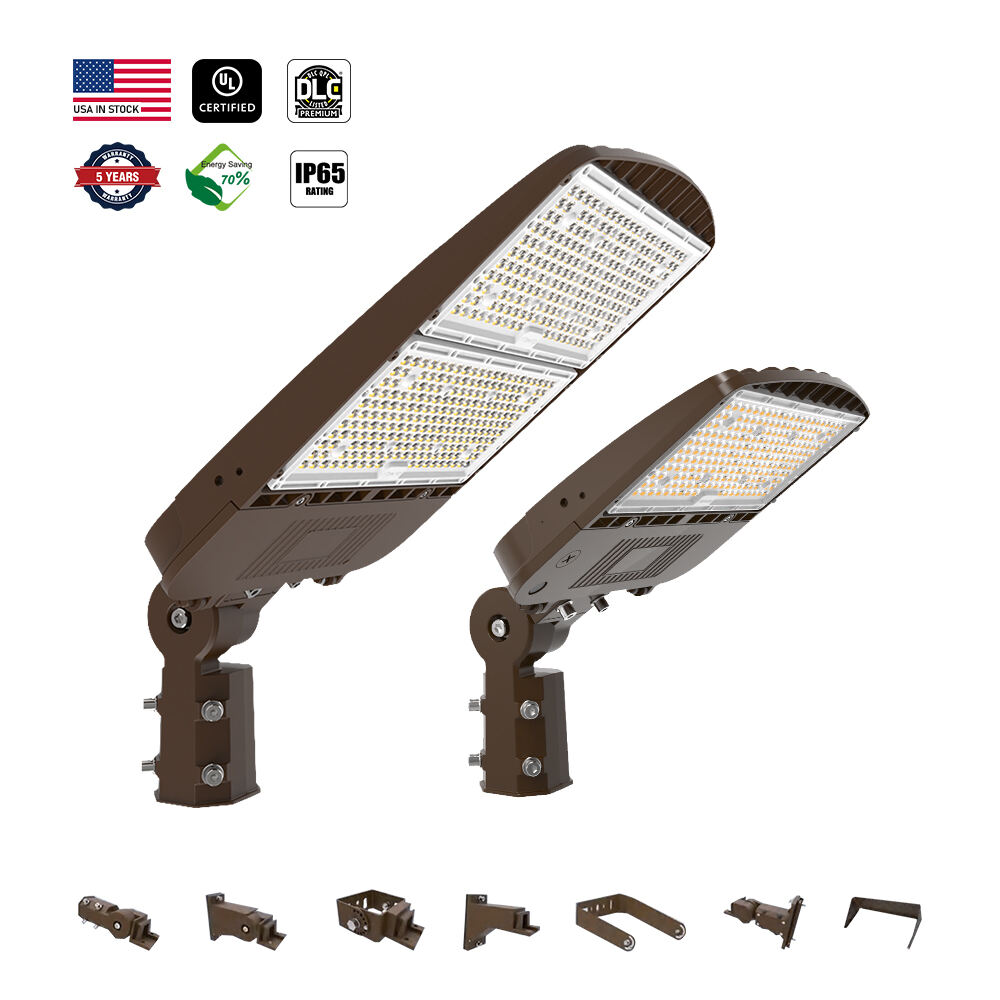
Parking areas are among the most straightforward applications for a led area light upgrade. These spaces typically operate on predictable schedules, have uniform mounting heights, and benefit greatly from consistent, high-quality illumination for both safety and security. The shoebox-style led area light is the industry-standard fixture format for this application, providing wide, even coverage from pole-mounted positions.
Civic plazas, community centers, sports fields, and public gathering areas share similar characteristics. In these environments, the improved color rendering of LED technology — with color rendering index (CRI) values typically above 70 and often above 80 — enhances visual clarity and contributes to public comfort and perceived safety. This is a meaningful qualitative benefit that accompanies the quantitative energy savings of the led area light upgrade.
For municipalities managing multiple public facilities, a standardized led area light specification across all sites simplifies procurement, reduces spare parts inventory, and streamlines the maintenance program — all of which contribute further to long-term cost efficiency.
Roadways, Intersections, and Pedestrian Zones
Street and roadway lighting presents slightly different requirements than parking and civic area lighting, but the core advantages of the led area light remain applicable. Uniform illuminance across pavement surfaces, consistent pole spacing, and compliance with national or local roadway lighting standards are the primary technical requirements in these settings.
Modern led area light products are engineered with Type II, Type III, and Type IV light distribution patterns that align directly with roadway lighting design standards. This makes it straightforward for lighting engineers to specify fixtures that meet photometric requirements while delivering the full energy savings potential of the technology.
Pedestrian zones and bike paths benefit from the improved color quality and vertical illuminance of a led area light, which helps pedestrians see each other more clearly and improves facial recognition — an important factor for personal safety and community comfort during evening hours. These are compelling public safety arguments that accompany the cost reduction narrative when municipalities present upgrade proposals to city councils or budget committees.
Implementation Considerations for Municipal Decision-Makers
Fixture Selection and Specification Standards
Selecting the right led area light specification for a municipal project requires attention to several technical criteria beyond simple wattage. Ingress protection (IP) ratings for dust and moisture resistance, impact resistance (IK) ratings, operating temperature range, and thermal management design all affect long-term reliability and performance in outdoor environments.
Municipalities should also evaluate the lumen output, beam angle options, color temperature (typically 4000K to 5000K for outdoor area lighting), CRI rating, and driver quality when specifying a led area light for public sector deployment. Compliance with relevant electrical safety standards and photometric certifications should be verified before finalizing any procurement decision.
A well-specified led area light will maintain its performance over time. Look for products with L70 lumen maintenance ratings that confirm the fixture will retain at least 70 percent of its initial light output after 50,000 or more hours of operation. This directly affects the long-term energy efficiency of the installation, since fixtures that depreciate quickly will require more frequent replacement to maintain required illuminance levels.
Project Phasing and Pilot Testing
For large municipal lighting networks, a phased implementation approach is often the most practical path forward. Rather than attempting a city-wide overnight transition, many municipalities begin with a pilot zone — a single parking facility, a defined street corridor, or a specific park — where a led area light installation can be evaluated for energy performance, maintenance experience, and community response before scaling the program.
A well-designed pilot project should include baseline energy metering before and after installation so that actual savings can be measured and documented. This data becomes a powerful tool for securing budget approval for subsequent phases of the program, demonstrating with real numbers rather than projections what the led area light transition is achieving for the municipality.
Phased rollouts also allow municipalities to refine their specifications, optimize their installation workflows, and negotiate better procurement pricing as volume commitments increase. This structured approach maximizes the total value delivered by the led area light program over its full implementation lifecycle.
FAQ
How much energy can a municipality realistically save by switching to a led area light?
The actual savings depend on the wattage of the fixtures being replaced, the number of operating hours per year, and the local electricity rate. In typical municipal retrofits replacing HPS or metal halide fixtures with a modern led area light, energy consumption reductions of 50 to 70 percent per fixture are commonly achieved. When scaled across hundreds or thousands of fixtures, this translates into substantial annual savings on electricity costs.
Does a led area light require more expensive installation compared to traditional fixtures?
Installation costs for a led area light are generally comparable to those for traditional outdoor fixtures, as the physical mounting methods and electrical connections are similar. In some cases, the lighter weight of LED fixtures can simplify installation. The higher upfront equipment cost of LED technology is typically offset within a few years through energy and maintenance savings, making the total cost of ownership lower over the fixture's service life.
Can existing poles and electrical infrastructure be reused when upgrading to a led area light?
In most cases, yes. A led area light is designed to be compatible with standard mounting configurations and pole arm dimensions used in existing outdoor lighting infrastructure. The reduced wattage of LED fixtures may also allow existing wiring and circuit breakers to support more fixtures per circuit, potentially reducing electrical infrastructure costs in some retrofit scenarios. A qualified lighting engineer should assess the existing infrastructure before proceeding.
What is the typical lifespan of a led area light used in municipal applications?
High-quality led area light products designed for outdoor municipal applications are typically rated for 50,000 to 100,000 hours of operation. At an average of 4,000 operating hours per year, this translates to a service life of 12 to 25 years. This significantly exceeds the lifespan of HPS or metal halide lamps, reducing the frequency and cost of lamp replacements and the associated labor for a municipal maintenance team.
Table of Contents
- The Energy Consumption Problem in Municipal Lighting
- How a LED Area Light Achieves Energy Reduction
- Financial Modeling for Municipal LED Retrofits
- Application Suitability Across Municipal Contexts
- Implementation Considerations for Municipal Decision-Makers
-
FAQ
- How much energy can a municipality realistically save by switching to a led area light?
- Does a led area light require more expensive installation compared to traditional fixtures?
- Can existing poles and electrical infrastructure be reused when upgrading to a led area light?
- What is the typical lifespan of a led area light used in municipal applications?