EN
EN



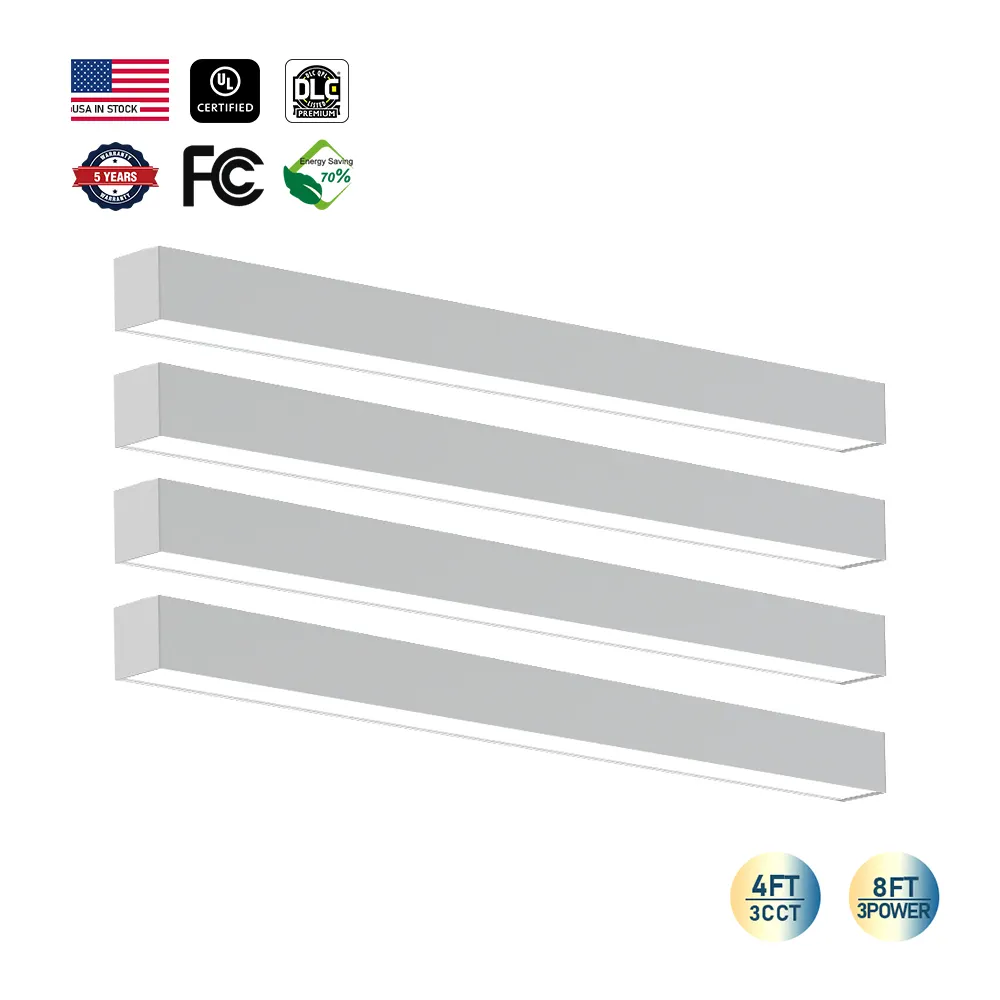
Walk into any well-designed retail store and you will notice something immediately — the lighting feels consistent, comfortable, and purposeful. Products appear vivid, aisles feel welcoming, and customers tend to linger longer. Behind that carefully crafted atmosphere, the choice of luminaire plays a decisive role. Led batten lights have emerged as a highly practical solution for achieving the kind of broad, uniform illumination that retail environments genuinely require. But the question worth exploring is not simply whether these fixtures look the part — it is whether they can structurally and functionally support the lighting uniformity that modern retail demands.
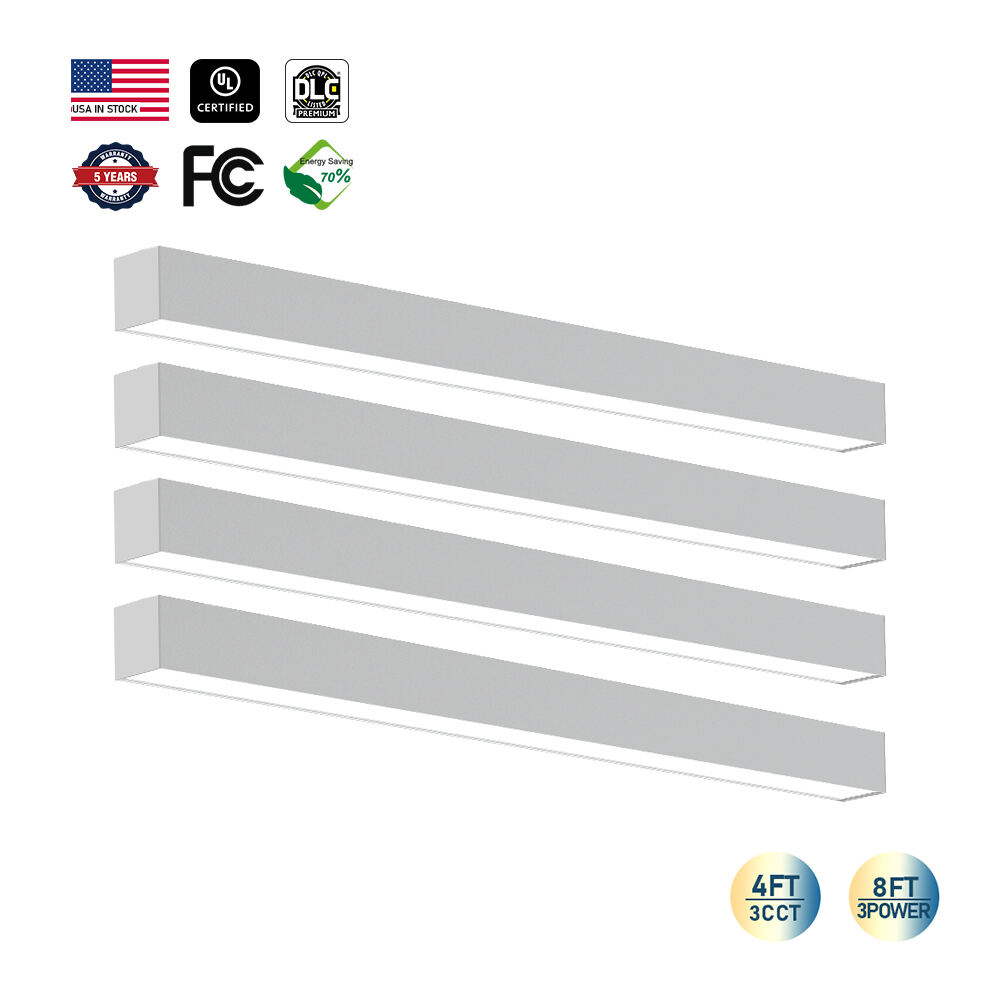
The answer, explored through the lens of retail lighting design, installation flexibility, and optical performance, is that led batten lights are genuinely well-suited to this task. Their elongated form factor, high lumen output, and adaptable installation configurations make them a compelling choice across grocery stores, fashion retailers, supermarkets, and even educational or commercial spaces that share similar lighting priorities. Understanding exactly why requires a closer look at how uniform lighting works, what led batten lights bring to the equation, and which operational factors retailers should weigh before making a decision.
Understanding Uniform Lighting in the Retail Context
What Uniform Lighting Actually Means for Retail Spaces
Uniform lighting refers to the even distribution of illuminance across a given space, minimizing the contrast between brighter and darker zones. In retail, this matters enormously because visual comfort directly influences customer behavior. When shoppers can see products clearly without squinting, straining, or navigating around pools of shadow, they engage more naturally with the merchandise. Poor lighting uniformity, on the other hand, can make shelves feel cluttered, products appear less appealing, and the entire store seem less professional.
The lighting uniformity ratio — typically expressed as the minimum illuminance divided by the average illuminance — should ideally approach 0.7 or higher in well-planned retail environments. Achieving this requires luminaires that distribute light broadly and predictably across horizontal and vertical surfaces. Spotlights and downlights, while excellent for accent purposes, often create high-contrast zones that disrupt uniformity unless supplemented by general ambient lighting. This is precisely the role that led batten lights are designed to fulfill.
Why Retail Lighting Challenges Demand a Linear Solution
Retail environments present a unique set of lighting challenges. Merchandise is displayed across wide floor areas, along tall shelving units, in refrigerated sections, and beneath display counters. A point-source luminaire illuminates a cone-shaped area, which means gaps between fixtures become inevitable as the ceiling height increases. Linear luminaires like led batten lights, by contrast, spread light along their full length, covering a wider strip of space below with significantly fewer dark intervals.
This geometric advantage becomes even more pronounced when fixtures are mounted in rows running parallel to product aisles. Light reaches both the floor and the vertical faces of shelving units, improving the visibility of products at multiple heights simultaneously. For large-format retailers such as supermarkets and warehouse stores, this kind of coverage efficiency is not just a convenience — it is a fundamental requirement for meeting both safety standards and brand presentation goals.
Key Features of LED Batten Lights That Enable Retail Uniformity
High and Consistent Lumen Output Across the Fixture Length
Led batten lights are designed to deliver consistent illuminance along their entire length rather than concentrating output at a single point. This characteristic, sometimes described as linear light distribution, ensures that the area beneath each fixture receives a relatively even illuminance rather than a bright center and dimmer edges. In a retail aisle context, this translates directly to more uniform visibility of products from one end of the shelf run to the other.
Modern led batten lights are available in output levels capable of meeting or exceeding retail lighting standards without the excessive energy consumption associated with fluorescent tube equivalents. Higher-quality units leverage advanced LED chip arrays and diffused optics to further smooth the distribution, reducing visible striping or hot spots along the fixture. This refinement is particularly valuable in fashion retail and food presentation areas where product color rendering and surface detail matter most.
CCT Flexibility and Its Impact on Merchandise Presentation
One of the more underappreciated advantages of contemporary led batten lights is selectable color temperature, often referred to as 3CCT or tunable white capability. Retail environments are not monolithic — a grocery store's fresh produce section benefits from a cooler, more energizing white light, while a clothing boutique may prefer a warmer tone to flatter skin tones and fabric textures. A single fixture family that supports multiple color temperature settings gives retail operators the flexibility to tune their environment without sourcing entirely different product lines.
This flexibility also has long-term operational value. As a retailer remodels sections or changes its brand identity, the lighting can be adjusted at the fixture level rather than requiring a full replacement cycle. For large chains managing dozens of locations, this kind of adaptability reduces both capital expenditure and operational disruption. led batten lights with 3CCT switching and broad voltage compatibility — such as AC120-347V — are particularly well-suited to North American retail environments where electrical infrastructure can vary between locations.
Linkable Design and Its Role in Coverage Planning
Linkable led batten lights allow multiple fixtures to be connected end-to-end, creating continuous illuminated runs of virtually any length. This feature is extraordinarily useful in supermarket aisles, school corridors, and open retail floors where long, uninterrupted coverage is the goal. By eliminating the dark breaks between individual fixtures, linkable designs dramatically improve uniformity ratios compared to systems where each fixture is installed with a gap between them.
From an installation standpoint, linkable led batten lights also simplify wiring. Rather than running individual power feeds to every fixture in a row, an electrician can connect power to the first unit and chain the rest in sequence. This reduces labor time, lowers installation costs, and minimizes the number of cable penetrations in the ceiling — a meaningful benefit in finished retail interiors where aesthetic integrity matters alongside function.
Installation Approaches That Maximize Uniform Coverage
Surface Mounting Versus Pendant Suspension in Retail
Led batten lights can be installed in several configurations depending on ceiling height, structural conditions, and the desired lighting effect. Surface mounting directly to the ceiling is the most common approach in standard retail environments with ceiling heights of 3 to 4 meters. At this height, a surface-mounted led batten light with a wide beam angle provides broad coverage across the floor and adjacent shelving, with relatively little loss of useful lumens.
Pendant suspension, on the other hand, is highly effective in spaces with higher ceilings or where the designer wants to bring the light source closer to the merchandise level. Suspended led batten lights in a supermarket setting, for example, can be dropped to a height that optimizes illuminance on the shelving unit tops and product faces, improving both visibility and color rendering in ways that ceiling-level mounting cannot always achieve. The choice between these approaches should be guided by a lighting calculation that accounts for ceiling height, fixture spacing, and target illuminance levels.
Spacing Logic for Achieving Target Uniformity Ratios
Even the best-performing led batten lights will produce poor uniformity if they are spaced incorrectly. A common rule of thumb in linear fixture design is that the spacing-to-mounting-height ratio (S/MH) should not exceed a value of approximately 1.5 for good uniformity. In practical terms, this means that fixtures mounted 3 meters above the floor should be spaced no more than 4.5 meters apart. For retail environments requiring higher uniformity or those with tall shelving blocking lateral light spread, a tighter spacing may be warranted.
Photometric simulation tools allow lighting designers to test different spacing arrangements before installation, identifying the configuration that meets the target uniformity ratio with the fewest fixtures. This is especially valuable in large-format retail where even modest reductions in fixture count can represent significant cost savings at scale. Retailers investing in led batten lights would benefit from engaging a lighting designer who can translate photometric data from the fixture manufacturer into a spacing plan that is both compliant and cost-efficient.
Operational and Commercial Advantages for Retail Operators
Energy Efficiency and Compliance With Lighting Standards
Beyond the purely optical case for uniform illumination, led batten lights offer compelling operational advantages that make them attractive to retail decision-makers concerned with energy costs and regulatory compliance. Well-specified led batten lights that carry DLC (DesignLights Consortium) certification have met rigorous efficiency and performance benchmarks, making them eligible for utility rebate programs in many jurisdictions across North America. These rebates can meaningfully offset the upfront cost of a full store retrofit.
Compared to legacy fluorescent batten systems, led batten lights typically consume 40 to 60 percent less energy while maintaining equivalent or superior illuminance levels. Over a retail facility's operating life — which may involve 3,000 to 5,000 hours of lighting per year — this efficiency advantage compounds into substantial utility cost reductions. For a chain with multiple locations, the aggregate savings across sites can represent a meaningful improvement to operating margins.
Maintenance Reduction and Long-Term Reliability
Maintenance costs are a significant and often underestimated component of retail lighting's total cost of ownership. Fluorescent tube systems require regular relamping, and the quality of light degrades progressively as tubes age — a phenomenon known as lumen depreciation. In a large supermarket with hundreds of fixtures, coordinating a relamping program while keeping the store operational requires logistical effort and labor expense. Led batten lights, by contrast, are rated for service lives that commonly exceed 50,000 hours, dramatically reducing the frequency of interventions required.
The sealed or semi-sealed construction of many led batten lights also makes them more resistant to the conditions found in retail environments — dust accumulation near delivery bays, humidity in refrigerated sections, and mechanical vibration from foot traffic or nearby equipment. This durability translates into more consistent light output over time, which in turn means that the uniformity achieved at commissioning is maintained throughout the fixture's operational life rather than eroding gradually as the system ages.
Suitability Across Different Retail Formats
Supermarkets and Grocery Stores
Supermarkets are perhaps the most natural application environment for led batten lights. The combination of long, parallel aisles, high shelving, and the need for consistent illuminance across both horizontal and vertical surfaces maps almost perfectly to the linear light distribution profile of these fixtures. Cooler color temperatures in the 4000K to 5000K range enhance the visual freshness of produce and refrigerated products, while high CRI values ensure that food appears as it naturally should — an important factor in purchasing decisions.
Linkable led batten lights running the full length of each aisle create the continuous, shadow-free illumination that makes navigation easy and merchandise clearly visible. The use of pendant-mounted configurations in higher-ceiling sections allows operators to fine-tune the mounting height for optimal shelf-face illuminance without compromising the architectural feel of the space.
Fashion Retail and Specialty Stores
Fashion retail has traditionally favored accent lighting to create drama and draw attention to hero products. However, the ambient base layer — which must support staff operations, fitting room approaches, and overall store navigation — benefits greatly from the uniform coverage that led batten lights provide. When used in the warmer CCT settings, these fixtures create an ambient environment that flatters product colors and creates a welcoming atmosphere without the harshness that cooler temperatures can introduce.
Specialty retailers, including electronics stores, home goods outlets, and bookshops, similarly benefit from the uniform illuminance that led batten lights deliver across wide floor areas. In these environments, customers often need to read labels, compare product details, and evaluate surface finishes — tasks that require reliable, even lighting rather than dramatic contrast. The practicality and adaptability of led batten lights make them a sensible ambient solution that complements rather than competes with any accent or display lighting layered above.
FAQ
Are led batten lights suitable for high-ceiling retail environments?
Yes, led batten lights can be used effectively in high-ceiling retail environments, particularly when installed as pendant-suspended fixtures. Suspension brings the light source closer to the merchandise level, improving illuminance on product faces and shelving tops. A lighting designer should conduct a photometric calculation to determine the optimal suspension height and fixture spacing for the specific ceiling height and uniformity requirements of the space.
What color temperature is recommended for retail led batten lights?
The ideal color temperature depends on the retail category. Grocery and supermarket environments typically benefit from neutral to cool white light in the 4000K to 5000K range, which enhances the visual appeal of fresh produce and packaged goods. Fashion and lifestyle retailers often prefer warmer tones in the 3000K to 3500K range to create a more inviting atmosphere. Fixtures with 3CCT switching capability offer the flexibility to adjust color temperature to suit evolving store needs without replacing the hardware.
Do led batten lights qualify for energy rebates in retail applications?
Many led batten lights that carry DLC certification qualify for utility rebate programs offered by energy providers across North America. These rebates are typically calculated based on the energy savings delivered compared to the baseline technology being replaced, such as fluorescent systems. Retailers planning a lighting upgrade should consult their local utility provider and review DLC qualification lists to identify which specific fixtures are eligible before finalizing their purchase decisions.
How does the linkable feature of led batten lights improve retail lighting?
Linkable led batten lights allow multiple fixtures to be connected end-to-end without gaps, creating continuous illuminated runs along full aisle lengths. This eliminates the dark intervals that would otherwise appear between separate fixtures, significantly improving uniformity ratios across retail floors. The linkable design also simplifies wiring by reducing the number of individual power connections required, which lowers installation costs and reduces cable complexity in finished retail ceilings.