EN
EN



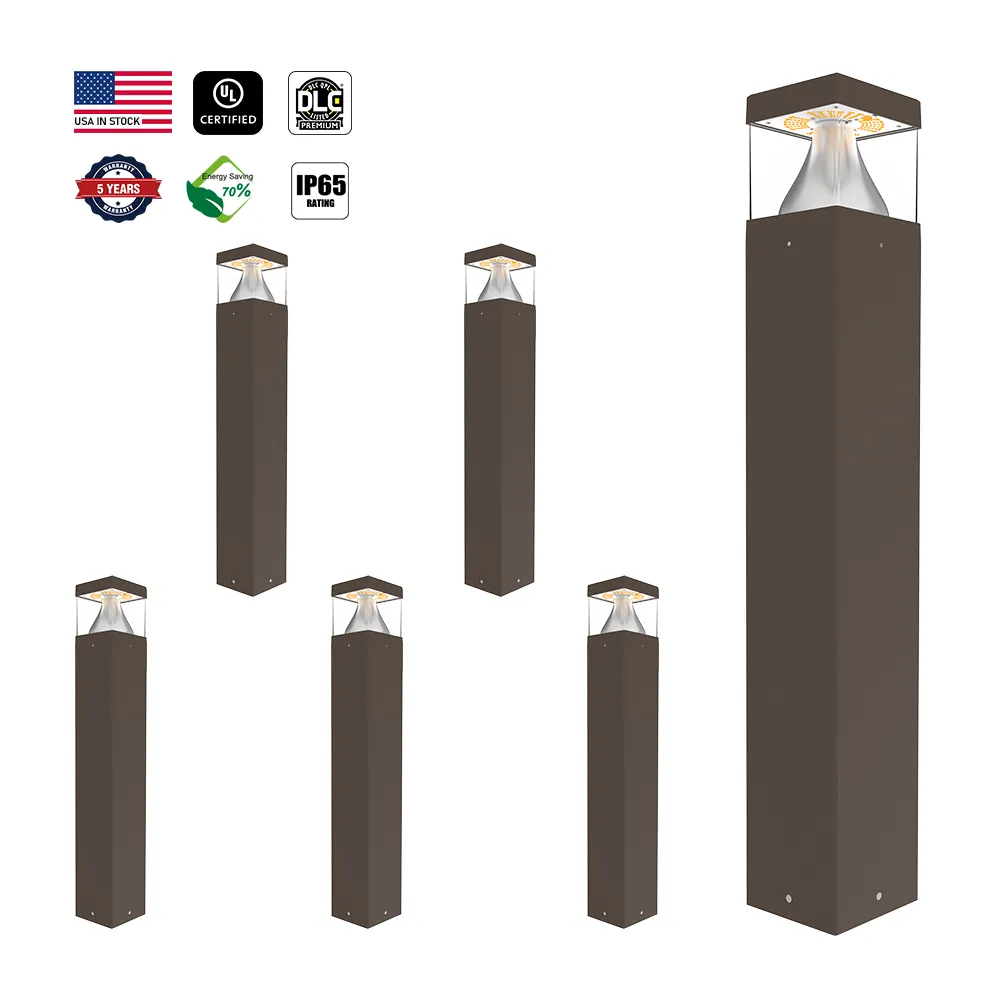
Public walkways, pedestrian paths, and shared outdoor corridors carry thousands of people every day — yet lighting in these spaces is often underestimated as a safety tool. When a path is poorly lit, it becomes a genuine hazard: uneven surfaces go unnoticed, potential threats are concealed, and the confidence of anyone walking after dark is dramatically reduced. The led bollard light has emerged as one of the most practical and purpose-built solutions for this exact challenge, offering ground-level illumination that guides, alerts, and reassures pedestrians simultaneously.
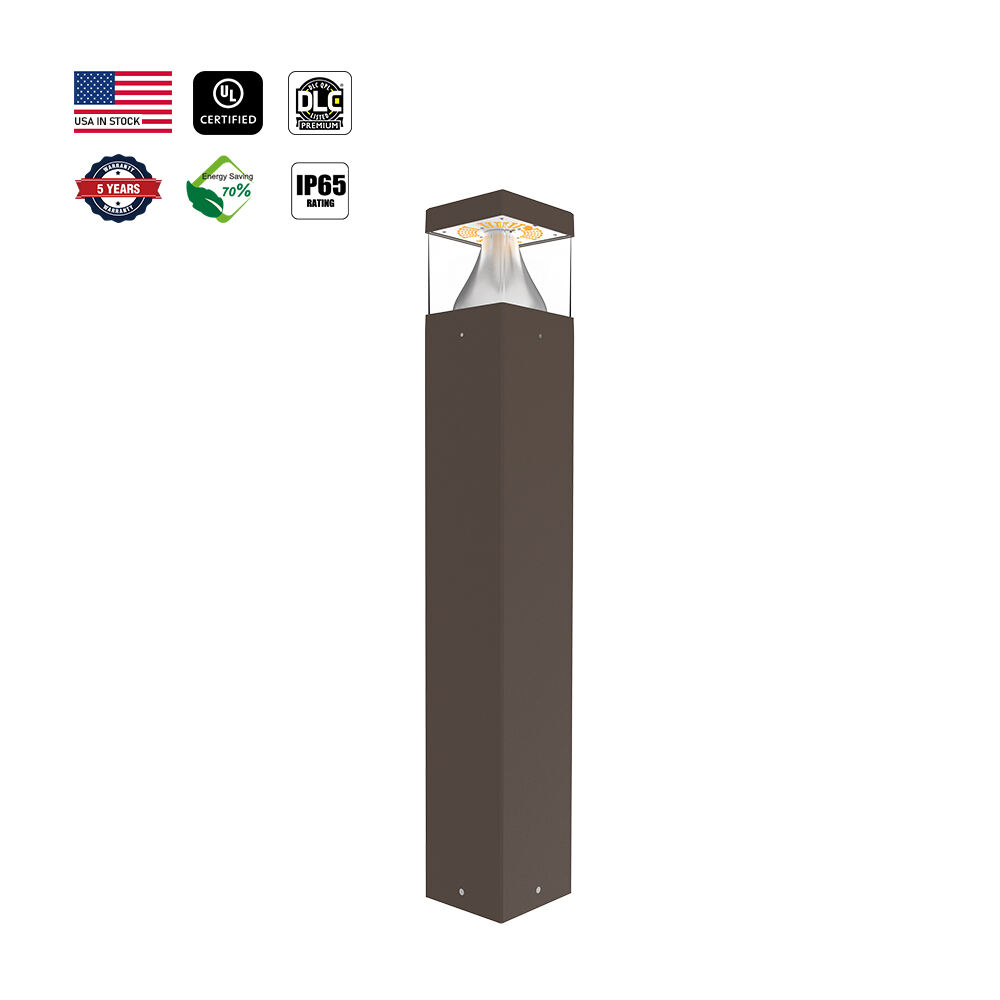
This article explores whether the led bollard light can genuinely support better safety outcomes in public walkways — and the answer is a clear yes, provided the right factors are considered in selection, placement, and design. Beyond simply illuminating a path, a well-specified led bollard light contributes to visual clarity, spatial orientation, anti-collision cues, and even psychological comfort for pedestrians. Understanding how and why this happens is essential for urban planners, facilities managers, and property developers who want to make smarter lighting decisions.
The Safety Case for Ground-Level Lighting in Walkways
Why Overhead Lighting Alone Is Insufficient
Traditional street lighting positioned high above walkways creates pools of light with significant shadow zones in between. For pedestrians walking at ground level, this uneven distribution of light makes it difficult to detect changes in surface elevation, obstacles at ankle height, or edges of paths and curbs. The higher the fixture, the longer the shadows it casts when a pedestrian moves through its beam — and those shadows are exactly where trip-and-fall incidents occur most frequently.
A led bollard light addresses this limitation by introducing illumination at a height typically between 600mm and 1200mm — directly within the visual field of a walking person. This placement ensures that the light source is oriented toward the surface itself, revealing texture, gradient changes, puddles, and surface markings that high-mounted fixtures routinely fail to highlight. The result is a more complete visual picture for anyone navigating the walkway.
It is also worth noting that in wide outdoor paths or plazas, relying solely on perimeter lighting or elevated poles leaves the central zone underlit. Strategically spaced led bollard light units distributed along the path's length can eliminate these central dark zones without introducing glare or visual discomfort to pedestrians walking through the space.
Physical Demarcation and Boundary Awareness
One of the most underappreciated safety functions of a led bollard light is its role as a physical marker. Each unit defines the edge of a pedestrian corridor, separating it from vehicle zones, planted areas, or private property boundaries. This physical presence — even in daylight — trains users to understand the spatial layout of a path, and at night, the lit units reinforce those boundaries unmistakably.
In mixed-use environments where cyclists, pedestrians, and occasional service vehicles share space, a line of led bollard light fixtures creates a visual and physical lane structure. Cyclists naturally respect the lit corridor. Pedestrians feel guided rather than lost. Even emergency service personnel can read the layout of a space more quickly when bollard lighting is consistently deployed.
The dual function of the led bollard light as both a light source and a spatial marker makes it uniquely valuable in public walkways compared to flush-mount ground lights or spotlights, which provide illumination but lack the physical presence that shapes pedestrian behavior.
Key Technical Features That Directly Enhance Safety
IP65 Waterproof Rating and All-Weather Reliability
A led bollard light deployed in a public outdoor walkway must perform in rain, fog, frost, and high humidity. This is where IP-rated enclosures become a non-negotiable safety feature. An IP65-rated led bollard light is fully protected against water jets from any direction, meaning it continues to illuminate reliably during heavy rainfall — precisely the conditions when pedestrian safety risk is highest.
Wet surfaces are more reflective and more slippery, meaning pedestrians need better visual cues, not fewer. A led bollard light with robust weatherproofing ensures continuous operation during storms, preventing the dangerous scenario where the path goes dark precisely when lighting is most needed. For public infrastructure, this kind of reliability is not a luxury — it is a fundamental safety requirement.
Beyond rain resistance, an IP65 enclosure also protects against dust and particulate ingress. In urban environments near construction zones, or in coastal areas with wind-driven sand and salt, a well-sealed led bollard light maintains its optical performance over years of outdoor service without degradation from internal contamination.
Wattage Selection and Appropriate Light Output
Selecting the correct wattage for a led bollard light is directly tied to safety outcomes. Too little output and the path remains insufficiently lit, defeating the purpose of the fixture. Too much output and the fixture becomes a source of glare, blinding approaching pedestrians and reducing their ability to see the surface ahead of them.
In practice, a led bollard light rated between 14W and 24W suits the majority of residential and semi-public walkway applications very well. These wattages provide enough lumen output to illuminate a 2–4 meter zone around each fixture while maintaining soft, non-glaring illumination that enhances rather than overwhelms the visual environment. For paths in parks, residential communities, or commercial plazas, this power range represents an effective middle ground.
Planners should also consider the spacing between led bollard light units when specifying wattage. Closer spacing can allow lower wattage per unit while maintaining consistent lux levels across the full path length. Wider spacing may require higher-output units to fill the gaps. Either approach can succeed when the relationship between fixture output and unit spacing is calculated thoughtfully as part of a lighting plan.
Aluminum Housing and Long-Term Structural Integrity
A led bollard light in a public walkway must not only perform optically — it must also endure physical stress. Aluminum die-cast housings offer an ideal combination of structural rigidity, corrosion resistance, and thermal conductivity. The rigid body resists impact from maintenance equipment, bicycles, or accidental contact, preventing collapse or tipping that could create a new hazard in the path.
Aluminum's natural corrosion resistance makes it far better suited to outdoor environments than steel alternatives, which may begin to show rust at mounting points and exposed edges within a few years. A corroded bollard not only looks neglected but may become structurally compromised, raising both safety and liability concerns. An aluminum led bollard light avoids this degradation pathway entirely.
Additionally, aluminum's thermal conductivity helps dissipate heat from the LED driver and chip assembly, extending the service life of the fixture. A led bollard light that maintains lower operating temperatures experiences slower lumen depreciation, meaning it continues to deliver adequate illumination for a longer period before requiring maintenance or replacement.
Placement Strategy for Maximum Safety Impact
Spacing Intervals and Consistent Coverage
Safety in walkway lighting depends less on individual fixture brightness and more on consistent coverage without dark gaps. The spacing of each led bollard light unit should be calculated to ensure that adjacent pools of illumination overlap slightly, creating a continuous visual corridor rather than a series of isolated bright spots separated by dim zones.
As a general principle, spacing intervals of 3 to 6 meters work well for most led bollard light installations in moderate-traffic pedestrian paths. High-footfall areas, such as entrances to transit stations, hospital corridors, or shopping center pedestrian links, may benefit from closer spacing to maximize both the lux level and the visual definition of the path boundary.
Irregular spacing — whether caused by obstacles, design changes, or post-installation additions — should be avoided. Pedestrians unconsciously calibrate their pace and attention level to the rhythm of the lighting they walk through. Inconsistent intervals disrupt that rhythm and increase cognitive load, which is itself a subtle safety risk in environments where older adults, people with visual impairments, or distracted users are common.
Positioning Relative to Path Edges and Transition Zones
Where a led bollard light is placed in relation to the path edge significantly influences its safety benefit. Placing units immediately at the inner edge of a planted border or boundary wall ensures that both the paving surface and the edge marker are illuminated simultaneously. This dual visibility is particularly important at path turns, intersections, and ramped sections where surface changes are greatest.
Transition zones — such as where a path narrows, changes gradient, or merges with a vehicle crossing — deserve extra attention in any led bollard light deployment plan. These are statistically the most common locations for pedestrian incidents. Placing fixtures closer together or at slightly higher output settings in these specific zones reinforces visual cues exactly where users need them most.
In locations where the path serves users with disabilities or mobility limitations, the led bollard light placement must also account for tactile paving strips and accessible route alignment. Lights should complement, not obstruct, these navigational aids. Proper coordination between lighting placement and accessibility infrastructure creates a walkway that is safe and inclusive for all users.
Environmental and Operational Benefits That Support Safer Infrastructure
Energy Efficiency and Consistent Operation Costs
A led bollard light consumes significantly less energy than older metal halide or sodium vapor bollard alternatives. This efficiency has a direct safety implication: lower operating costs make it economically sustainable for facility managers to keep the lighting operational throughout the night, every night. When budget pressure forces operators to reduce lighting hours, safety is compromised. The low energy consumption of a modern led bollard light removes that trade-off.
Over a multi-year operational cycle, the energy savings generated by a led bollard light installation can be substantial enough to fund additional fixture placements, extending coverage to previously unlit sections of a path network. This compounding benefit — where efficiency creates the budget for expansion — progressively improves walkway safety as the infrastructure investment grows.
Wide voltage compatibility — such as AC 120–347V input — also ensures that a led bollard light can be deployed across different infrastructure environments without requiring bespoke electrical modifications. This compatibility reduces installation complexity, keeps costs manageable, and ensures the fixtures function correctly in both North American and international grid environments.
Low Maintenance Requirements and Reduced Downtime Risk
One of the most significant safety risks in any public lighting system is unplanned outages caused by lamp failure. Traditional discharge lamps have relatively short rated lives and fail unpredictably, leaving sections of a path dark without warning. A led bollard light has a rated service life that typically exceeds 50,000 hours, meaning years of continuous operation before any replacement is needed under normal usage conditions.
This longevity translates directly into fewer dark nights on public walkways. Maintenance teams can plan replacements on scheduled cycles rather than reacting to emergency failures. The path remains reliably illuminated, and the risk of an undetected dark zone creating an accident is substantially reduced compared to older lighting technology.
For public authorities managing large walkway networks across parks, campuses, or urban districts, the reduced maintenance burden of a led bollard light deployment also has workforce implications. Fewer reactive callouts mean technicians can be deployed more strategically, focusing on preventive inspection rather than emergency repair.
FAQ
How far apart should led bollard light units be spaced in a public walkway?
Spacing depends on fixture output and path width, but a typical range of 3 to 6 meters between each led bollard light unit works for most standard pedestrian paths. High-traffic or safety-critical zones may benefit from closer spacing. A lighting calculation that considers lumen output, mounting height, and surface reflectivity will give the most accurate spacing recommendation for any specific project.
Is a 14W led bollard light sufficient for a residential community path?
Yes, in most residential pathway applications a 14W led bollard light delivers adequate illumination when units are spaced appropriately. Lower wattage combined with moderate spacing creates a consistent, comfortable lighting level without glare. For wider plazas or paths requiring higher lux values, 19W or 24W options offer more output while remaining energy-efficient.
What does IP65 mean for a led bollard light used outdoors?
IP65 indicates that the led bollard light enclosure is fully dustproof and protected against water jets from any direction. This rating is well suited to outdoor public walkways where the fixture will be exposed to rain, irrigation, cleaning equipment, and high-humidity conditions. It ensures the light continues to perform reliably in the wet conditions that are most critical for pedestrian safety.
Can a led bollard light also serve a decorative function in landscape design?
Absolutely. The led bollard light is widely used in landscape architecture precisely because it combines functional illumination with aesthetic form. Available in various heights and housing finishes, it integrates naturally into garden paths, courtyard environments, and themed public spaces. The visual presence of the bollard itself — whether lit or unlit — contributes to the designed character of the space while fulfilling its primary safety role.