EN
EN



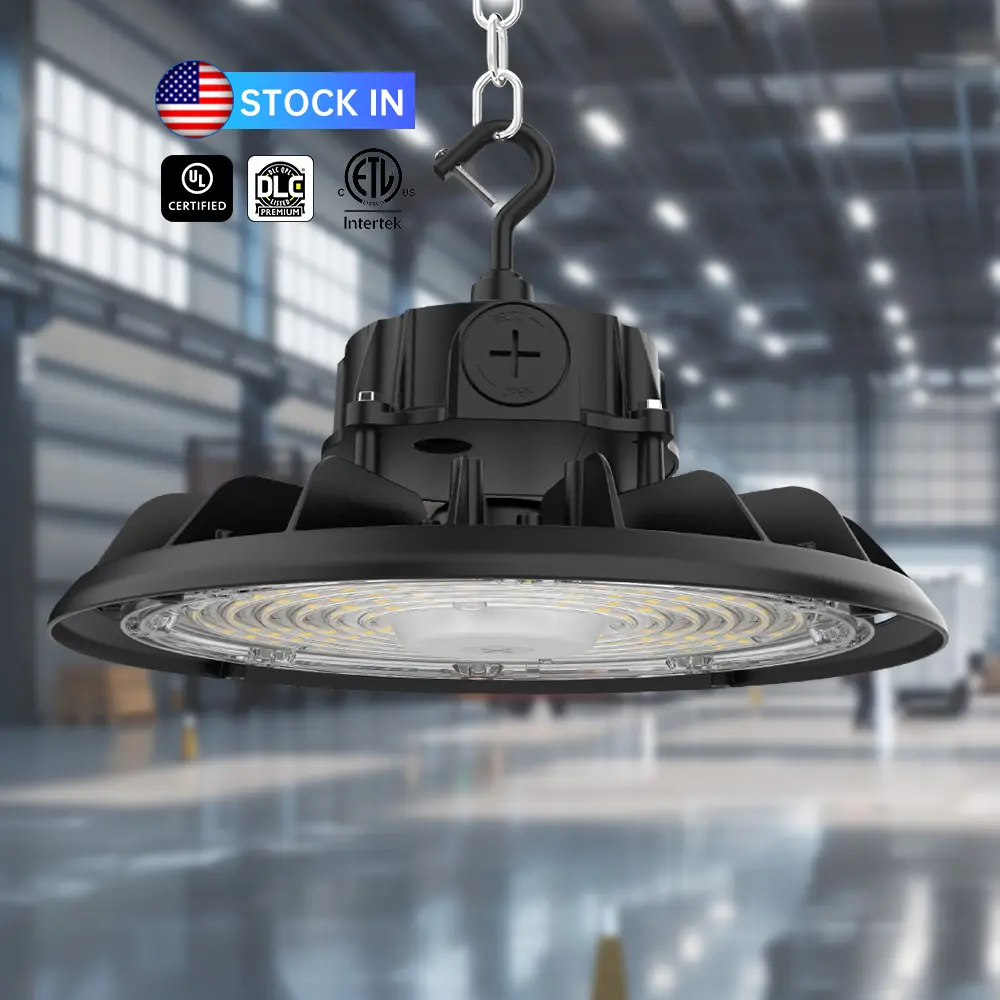
Across the global logistics industry, a quiet but powerful transformation is underway. Distribution hubs, fulfillment centers, and large-scale warehousing operations are systematically replacing outdated lighting systems with modern, high-performance alternatives. At the heart of this shift is the led high bay light, a technology that has moved far beyond novelty to become a strategic infrastructure investment. Logistics leaders are not simply chasing energy savings — they are responding to a complex set of operational, regulatory, and competitive pressures that make upgrading a logical and urgent decision.
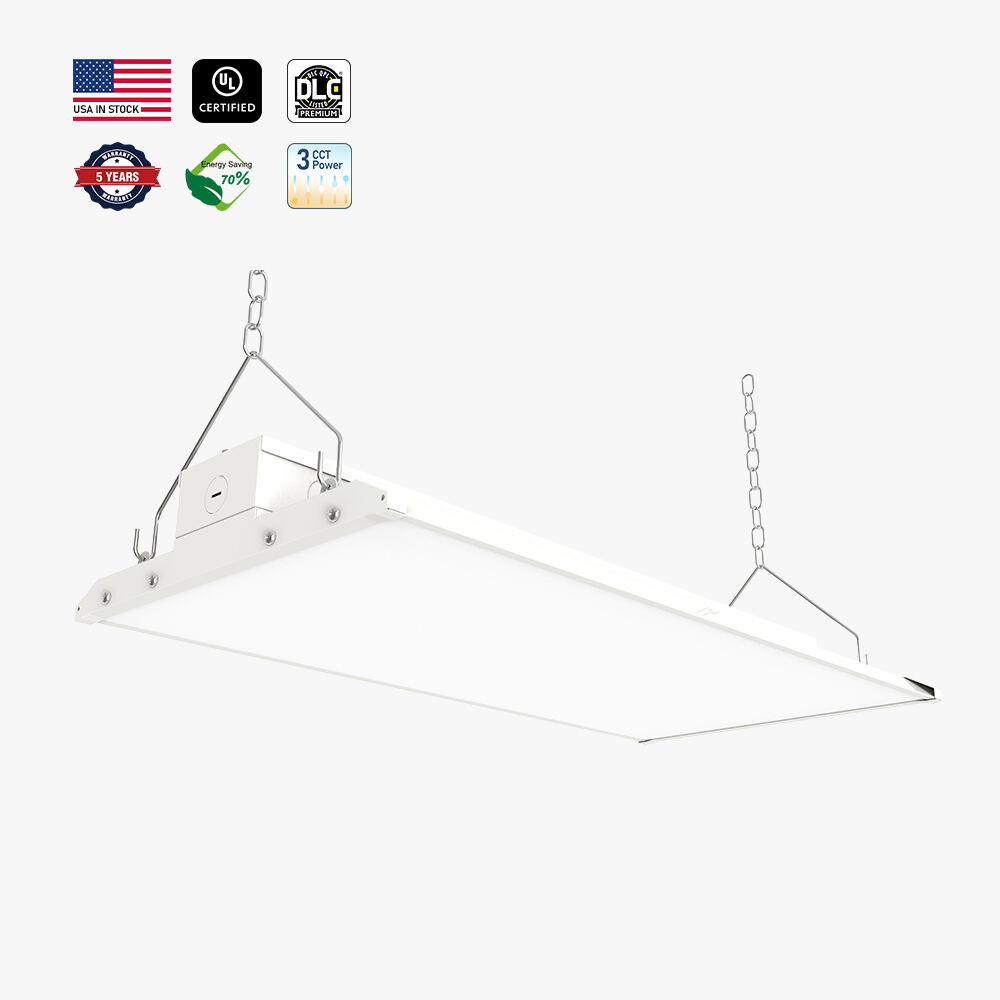
Understanding why logistics centers are committing to this upgrade requires looking carefully at what they actually need from their lighting infrastructure. These are not ordinary commercial spaces. Ceilings stretch to twelve, fifteen, or even twenty meters. Operations run continuously, often across multiple shifts and seven days a week. Workers must identify labels, scan barcodes, navigate fork-lift corridors, and manage inventory with precision. A led high bay light that delivers consistent, high-quality illumination under those conditions offers measurable advantages that older technologies simply cannot match.
The Operational Demands Driving Lighting Upgrades
High Ceilings and the Need for Targeted Illumination
One of the most defining characteristics of a logistics facility is its ceiling height. Standard commercial lighting fixtures were never designed to project adequate foot-candles down to the floor level from heights exceeding ten meters. The result with traditional high-intensity discharge lamps or older fluorescent arrays is predictable: uneven illumination, dark patches near racking systems, and inadequate light in picking aisles. A properly specified led high bay light addresses this by combining high lumen output with precisely engineered optics that direct light exactly where it is needed.
Adjustable beam angle technology, such as the ninety-degree adjustable designs now available in linear formats, allows facility managers to tailor light distribution across different zones within the same building. Receiving docks may require broader wash lighting, while narrow racking aisles benefit from a more focused beam pattern. This flexibility means a single led high bay light product family can serve multiple functional zones without requiring entirely different fixture types.
Logistics centers that have completed upgrades consistently report significant reductions in picking errors and near-miss incidents. Better visibility translates directly into operational accuracy, which matters enormously in facilities processing thousands of orders every hour. The physical characteristics of the led high bay light — not just its energy efficiency — are driving adoption at a rapid pace.
Continuous Operation and Long-Term Reliability
A logistics center that operates around the clock places extraordinary stress on its lighting infrastructure. Metal halide and sodium vapor lamps, once the default choice for large industrial spaces, were never ideal for continuous-duty cycles. They suffer from lumen depreciation that accelerates with frequent switching, require extended warm-up periods, and demand regular re-lamping that disrupts operations and incurs labor costs. Modern led high bay light systems were engineered from the ground up to handle these conditions.
Rated service lives of fifty thousand hours or more are now standard across quality-tier led high bay light products. In practical terms, that translates to well over a decade of around-the-clock use before meaningful lumen depreciation becomes a concern. For logistics operators calculating the total cost of ownership, this longevity fundamentally changes the financial equation. Maintenance windows are reduced, replacement schedules are extended, and the hidden costs of lamp disposal are largely eliminated.
Thermal management is a critical factor in achieving that longevity. Premium led high bay light designs incorporate robust heat dissipation systems that keep LED junction temperatures within safe operating ranges even in ambient environments that can fluctuate significantly between seasons. Facilities in both hot climates and cold-storage adjacent zones find that quality-engineered led high bay light fixtures maintain consistent performance across the full range of operating conditions.
Energy Efficiency as a Strategic Business Driver
The Scale Effect in Large Logistics Facilities
Energy is one of the largest variable costs in logistics facility operations, and lighting represents a substantial portion of that consumption. A major distribution center may require hundreds or even thousands of individual fixtures to illuminate its floor space adequately. When each of those fixtures is a legacy high-intensity discharge lamp consuming four hundred to one thousand watts, the aggregate energy load is enormous. Replacing that installed base with a led high bay light system delivering equivalent or superior illumination at one-third to one-half the wattage produces energy savings that are immediately material to the facility's operating budget.
A three-hundred-watt linear led high bay light delivering over thirty thousand lumens can replace legacy fixtures consuming five hundred watts or more while actually improving measured foot-candle levels at work-surface height. Multiply that individual fixture saving across five hundred or a thousand installed units running twenty hours per day, and the annualized energy cost reduction becomes a compelling financial argument that resonates at the CFO level, not just with facility engineers.
Sustainability commitments are amplifying this financial logic. Publicly traded logistics companies face increasing investor scrutiny of their environmental footprints. Upgrading to high-efficiency led high bay light technology is one of the most quantifiable and documentable steps a logistics operator can take toward reducing Scope 2 carbon emissions. The combination of direct cost savings and sustainability reporting value makes the business case exceptionally strong.
Smart Controls and Demand-Responsive Lighting
Energy efficiency in modern led high bay light systems extends well beyond the base wattage reduction. Integration with occupancy sensors, daylight harvesting systems, and centralized building management platforms allows logistics facilities to implement dynamic lighting strategies that match illumination levels to actual operational needs in real time. An aisle that is temporarily unoccupied between picking cycles does not need to be lit at full intensity. A receiving dock that benefits from natural light through skylights during morning hours can automatically reduce electrical consumption accordingly.
These control strategies can achieve additional energy reductions of twenty to forty percent beyond the base efficiency gains of the led high bay light fixture itself. For a facility that has already realized significant savings through the basic technology upgrade, that additional layer of optimization compounds the return on investment substantially. Logistics operators who deploy smart led high bay light systems with full controls integration consistently outperform those who implement simple one-for-one replacement strategies.
The compatibility of modern led high bay light products with DALI, 0-10V dimming, and wireless control protocols means that facilities can phase in sophisticated controls over time, beginning with the fixture upgrade and layering in automation as budget allows. This phased approach reduces the upfront capital requirement while still capturing the most significant energy savings from day one.
Worker Safety, Productivity, and Facility Compliance
Illumination Quality and Human Performance
The quality of light in a logistics environment has a direct and measurable impact on worker performance and safety. High Color Rendering Index values — typically Ra80 or above in quality led high bay light products — mean that workers can accurately distinguish between similarly colored labels, packaging, and products. In a fulfillment operation handling thousands of SKUs with color-coded bins and labels, this distinction can be the difference between accurate fulfillment and costly errors.
Glare control is equally important. Legacy high-intensity discharge lamps often produce harsh point-source glare that causes eye strain during long shifts. Contemporary led high bay light designs use diffusion optics and careful beam engineering to deliver high lumens without uncomfortable glare. Workers report reduced fatigue and improved visual comfort, which supports both productivity and safety outcomes. Ergonomics-conscious logistics operators recognize that lighting quality is a legitimate component of their worker welfare programs.
Flicker-free operation, another characteristic of quality led high bay light technology, eliminates the stroboscopic effect that can make rotating machinery appear stationary — a genuine safety hazard in facilities operating conveyors, sorters, and other moving equipment. Eliminating flicker is not merely a comfort issue; it is a risk management consideration that facility safety officers take seriously.
Regulatory Environment and Green Building Certification
Building energy codes in many jurisdictions are now mandating minimum efficacy levels for commercial and industrial lighting that legacy technologies cannot meet. Logistics centers undertaking renovation, expansion, or new construction face a regulatory environment that effectively requires the adoption of led high bay light solutions regardless of other financial considerations. Proactive operators are getting ahead of these requirements rather than waiting for mandatory compliance deadlines.
Green building certification programs, including LEED and BREEAM, assign significant credits for energy-efficient lighting installations. Logistics real estate developers and operators pursuing certified status find that a comprehensive led high bay light upgrade contributes meaningfully to their certification point totals. This certification translates into tangible commercial value — lower lease costs, higher asset valuations, and preferential access to green financing instruments.
Insurance carriers are also beginning to differentiate their risk assessments for industrial facilities based on lighting quality and maintenance records. A facility equipped with documented-performance led high bay light systems that meet or exceed recommended illuminance levels may qualify for more favorable treatment in risk reviews. This is an emerging dimension of the business case that forward-thinking logistics operators are beginning to quantify.
Technology Evolution Making the Upgrade Decision Easier
Advances in LED Performance and Fixture Design
The pace of advancement in led high bay light technology has been remarkable over the past decade. Early-generation LED fixtures in the high bay category struggled to match the raw lumen output of the metal halide lamps they were intended to replace, particularly at competitive price points. That gap has closed decisively. Contemporary led high bay light products achieve efficacy ratings exceeding one hundred and fifty lumens per watt, while specialized high-efficacy designs are pushing two hundred lumens per watt and beyond.
Linear form factors have gained particular traction in logistics applications because their elongated shape distributes light more evenly across racking aisles than round bay designs. A four-foot linear led high bay light spanning the width of a picking aisle provides superior uniformity compared to a single round fixture centered above the same space. This improved uniformity directly reduces the contrast between bright spots and shadow zones that characterizes legacy installations.
Mechanical flexibility has improved alongside photometric performance. Adjustable mounting brackets, rotatable end caps, and variable beam angle options mean that a single led high bay light model can be configured for multiple mounting orientations and applications within the same facility. This versatility simplifies procurement, reduces SKU complexity in maintenance inventory, and lowers the overall cost of a facility-wide upgrade program.
Financial Instruments and Incentive Programs Supporting Adoption
Capital cost has historically been cited as a barrier to led high bay light adoption, but the financing landscape has evolved significantly. Energy service companies offer performance-based contracts in which the led high bay light upgrade is funded entirely from projected energy savings, eliminating the upfront capital requirement. Under these structures, logistics operators achieve improved lighting and reduced operating costs from day one without deploying capital from their own balance sheets.
Utility rebate programs remain widely available in many markets, providing direct financial incentives for qualifying led high bay light installations. These rebates can offset a meaningful portion of material and installation costs, improving payback periods significantly. Experienced lighting project managers working in the logistics sector have developed efficient processes for navigating rebate applications, making this incentive more accessible than it once was for first-time applicants.
Tax incentive structures in multiple jurisdictions allow accelerated depreciation or direct deductions for qualifying energy-efficiency investments, including led high bay light installations. The combination of operating savings, utility rebates, and tax benefits can compress effective payback periods to two or three years even for large-scale projects. At that return profile, the upgrade decision becomes straightforward for any logistics operator with a disciplined capital allocation process.
FAQ
What wattage of led high bay light is typically appropriate for a logistics center?
The appropriate wattage depends primarily on ceiling height, required illuminance levels, and the specific activities being performed in each zone. As a general reference, mounting heights between six and nine meters commonly use fixtures in the one-hundred-fifty to two-hundred-watt range, while heights above ten meters typically require two-hundred-fifty to three-hundred-watt or higher output fixtures. A photometric layout study using the actual fixture's IES file is the most reliable way to confirm wattage selection before procurement.
How does a linear led high bay light compare to a round bay design for warehouse racking aisles?
Linear fixtures are generally preferred for racking aisles because their elongated light distribution pattern aligns with the geometry of the aisle. A linear led high bay light mounted end-to-end above an aisle provides more uniform horizontal illumination and better vertical surface brightness on the faces of racking shelves, which is critical for label reading and inventory management. Round bay designs are often better suited for open floor areas, staging zones, and loading docks where wide-area distribution is more important than aisle-specific uniformity.
How long does a led high bay light installation project typically take for a large logistics facility?
Project duration varies with facility size, the number of fixtures being replaced, and the working arrangement with the facility operator. Many logistics centers require phased installation to avoid operational disruption, completing sections during off-peak hours or scheduled maintenance windows. A medium-sized facility of twenty thousand square meters might complete a full led high bay light upgrade over four to eight weeks of phased installation. Larger facilities with complex operational constraints may extend timelines accordingly. Detailed project planning before mobilization is essential to minimize interference with daily logistics operations.
What maintenance should be expected for a led high bay light system after installation?
One of the primary advantages of transitioning to a led high bay light system is the dramatic reduction in routine maintenance requirements. Unlike legacy discharge lamps that require scheduled re-lamping every one to three years, quality LED fixtures are designed to operate for fifty thousand hours or more before meaningful lumen depreciation occurs. Routine maintenance is typically limited to periodic cleaning of the fixture housing and optics to maintain light output, inspection of mounting hardware and electrical connections, and monitoring of any integrated controls or sensors for proper function. A well-maintained led high bay light installation should deliver consistent performance for ten or more years before any significant component replacement is necessary.
Table of Contents
- The Operational Demands Driving Lighting Upgrades
- Energy Efficiency as a Strategic Business Driver
- Worker Safety, Productivity, and Facility Compliance
- Technology Evolution Making the Upgrade Decision Easier
-
FAQ
- What wattage of led high bay light is typically appropriate for a logistics center?
- How does a linear led high bay light compare to a round bay design for warehouse racking aisles?
- How long does a led high bay light installation project typically take for a large logistics facility?
- What maintenance should be expected for a led high bay light system after installation?