EN
EN



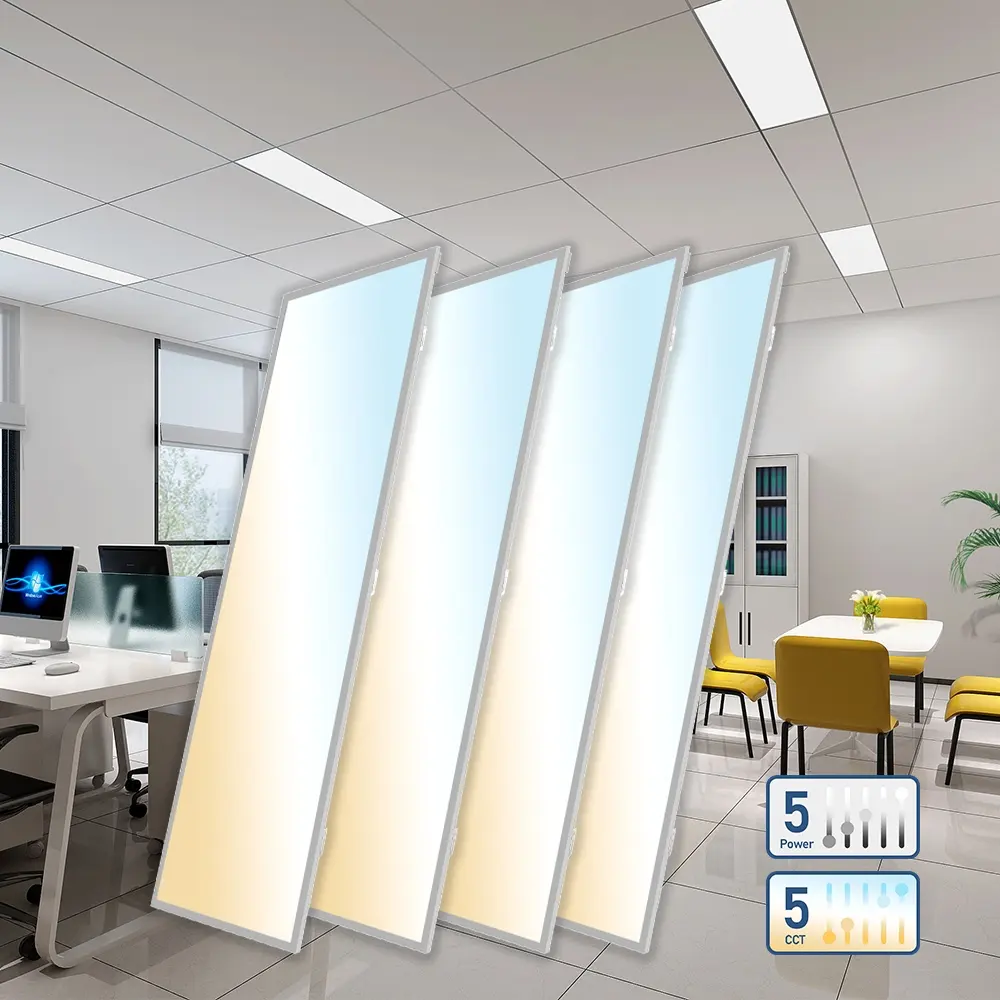
Indoor lighting comfort is no longer just about brightness. It encompasses glare control, color accuracy, thermal management, and the psychological effect that light has on the people working or living beneath it. The led flat panel light has emerged as one of the most effective tools for addressing all of these comfort-related factors simultaneously, especially in commercial and professional indoor environments where occupant well-being directly influences productivity and satisfaction.
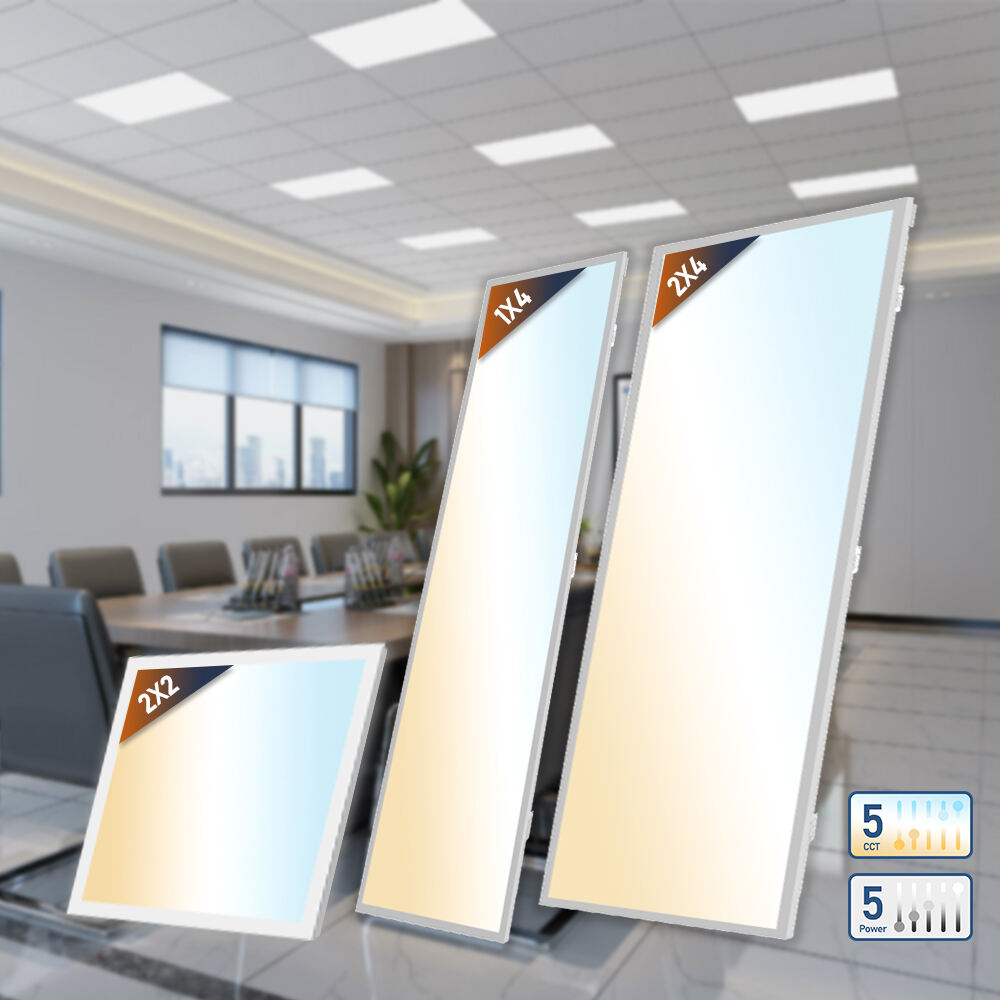
Unlike traditional fluorescent troffers or exposed bulb fixtures, a led flat panel light distributes illumination evenly across a wide surface area, eliminating the harsh hotspots and flickering patterns that have long been associated with occupant discomfort. This article explores how this type of fixture specifically improves the indoor lighting experience across multiple measurable and perceptible dimensions, from light quality to physical installation design.
The Science Behind Uniform Light Distribution
How Panel Design Eliminates Hotspots
One of the primary reasons a led flat panel light improves comfort is rooted in its physical construction. The fixture uses a diffuser panel, typically made from prismatic or opal polycarbonate material, to spread light uniformly across the entire face of the fixture. This means the light reaching the occupant's work surface comes from a broad emitting area rather than a concentrated point source.
Hotspots, which are areas of concentrated brightness surrounded by relative darkness, are a well-documented source of visual fatigue. When the eye must constantly adjust between bright and dim zones within the same visual field, the ciliary muscles in the eye strain over time. The even emission surface of a led flat panel light significantly reduces this contrast variation, making extended exposure far more comfortable.
Back-lit led flat panel light designs, where the LED strips are mounted behind the diffuser panel, tend to produce the smoothest light output. This configuration allows the light to scatter and blend thoroughly before reaching the diffuser surface, resulting in an illumination pattern that appears almost cloud-like in its uniformity.
The Role of Illuminance Uniformity Ratios
Lighting engineers measure spatial consistency using illuminance uniformity ratios, which compare the minimum illuminance on a work plane to its average. A high-quality led flat panel light typically achieves uniformity ratios above 0.7, meaning the dimmest point on the floor or desk receives at least 70 percent of the average light level. This is a standard associated with low visual strain in sustained-task environments.
Traditional fluorescent tube layouts often produce striped illumination patterns, with brighter bands directly below the tubes and darker bands between them. Replacing these with a led flat panel light eliminates this striping effect entirely, because the entire panel surface emits at a consistent luminance level. Workers in offices, schools, and medical settings benefit immediately from this change.
Uniformity also affects how a room 'feels' in a subjective sense. Spaces lit with high-uniformity fixtures appear cleaner, more open, and more professional. This perceptual quality is why architects and interior designers frequently specify the led flat panel light for corporate offices, retail showrooms, and healthcare interiors where ambiance directly supports business outcomes.
Glare Reduction and Visual Ergonomics
Understanding Unified Glare Rating in Panel Fixtures
Glare is the single most commonly reported source of discomfort in commercial lighting surveys. The Unified Glare Rating system, known as UGR, quantifies the discomfort glare produced by a luminaire in a given environment. A UGR value below 19 is considered acceptable for most office and task environments, and a well-designed led flat panel light consistently achieves values in this range or lower.
The flat, wide-area emission surface of a led flat panel light contributes directly to low UGR performance. Because no single point on the panel is intensely bright relative to its surroundings, the fixture does not create the sharp luminance contrast that the human visual system registers as glare. This is a structural advantage over recessed downlights or bare strip lights, both of which concentrate brightness into small angular zones.
For environments with significant screen usage, such as open-plan offices or computer labs, low-glare lighting is not a luxury but a functional requirement. Reflections from high-glare sources on monitor screens reduce legibility and force users into awkward postures to avoid the reflection. A led flat panel light with appropriate prismatic diffusion minimizes these screen reflections and supports healthy ergonomic behavior.
Ceiling Luminance and the Comfort of Visual Balance
Comfort in indoor lighting is not only about what happens at the work surface. The luminance ratio between the task area and the surrounding environment, including the ceiling plane, affects how relaxed or tense the visual system remains over time. A led flat panel light produces a gently luminous ceiling that frames the space without overwhelming peripheral vision.
When ceilings are dark and fixtures are bright, the eye experiences high contrast whenever it glances upward. Over a full workday, this contrast cycle adds cumulative strain. A well-placed led flat panel light creates a ceiling that is bright enough to be part of the ambient environment without producing the kind of discomfort associated with extremely high-luminance sources.
In large open spaces such as warehouses, conference rooms, or hospital corridors, the visual 'softness' of a led flat panel light installation is particularly valued. Occupants report feeling less fatigued and more focused in spaces where ceiling brightness is consistent and restrained rather than dramatic and uneven.
Color Quality and Its Effect on Perception and Well-Being
Color Rendering Index and Visual Accuracy
A high Color Rendering Index, or CRI, is essential for lighting that supports accurate color perception. When a led flat panel light achieves a CRI of 80 or above, it renders the colors of objects, surfaces, and materials with enough fidelity that the human brain does not need to compensate or second-guess what it sees. This reduces cognitive load and makes tasks involving color discrimination significantly easier.
In environments like retail stores, design studios, or medical examination rooms, a led flat panel light with CRI 90 or higher becomes critically important. Clinicians need to accurately assess skin tone and tissue color. Designers need to evaluate material samples under consistent and accurate light. Even in standard office environments, high-CRI lighting improves mood and reduces the dull, washed-out feeling associated with low-CRI sources.
Modern led flat panel light products are typically available in CRI 80 and CRI 90 variants. Specifying the appropriate CRI tier for the application is a straightforward decision that significantly impacts occupant satisfaction. Higher-CRI fixtures cost marginally more but deliver a noticeably more vibrant and comfortable visual environment.
Color Temperature Selection for Different Environments
The color temperature of a led flat panel light, measured in Kelvin, plays a direct role in how a space feels psychologically. Warm white temperatures around 2700K to 3000K create a relaxed and inviting atmosphere suitable for hospitality or residential applications. Neutral white temperatures around 4000K are commonly specified for offices and schools because they support alertness without feeling clinical. Cool white at 5000K to 6000K is often used in industrial or healthcare settings where task accuracy is paramount.
Choosing the correct color temperature for a led flat panel light installation is as important as specifying the correct lumen output. A mismatch between color temperature and the intended use of a space can undermine occupant comfort even when all other lighting metrics are technically adequate. A break room lit at 6000K, for instance, will feel cold and unwelcoming no matter how bright it is.
Many modern led flat panel light fixtures are available with selectable or tunable color temperature options, allowing facility managers to adjust the light character to suit different times of day or changing occupancy patterns. This flexibility represents a significant comfort advantage over older fluorescent systems, which were locked into fixed color temperatures from the moment of installation.
Installation Design and Its Contribution to Comfort
Recessed and Drop-Ceiling Integration
The physical installation method of a led flat panel light contributes to comfort in ways that extend beyond photometric performance. Recessed panel fixtures sit flush with the ceiling plane, removing the visual clutter of exposed hardware, brackets, and housing. This clean ceiling aesthetic reduces visual noise in the environment and contributes to a sense of calm and order that occupants consciously or unconsciously appreciate.
Drop ceiling systems, commonly found in commercial offices, healthcare buildings, and educational facilities, are ideally suited to the standard dimensions of a led flat panel light. A 2x4 foot panel fits precisely into a standard T-bar grid without modification, making the transition from older troffers effortless. The result is a ceiling that looks intentional and finished rather than patched or improvised.
Beyond aesthetics, flush-mounted or recessed fixtures do not interrupt air circulation or create dust-collecting ledges the way surface-mounted industrial fixtures can. In environments where cleanliness standards matter, such as food processing areas or cleanrooms, the smooth profile of a recessed led flat panel light is a practical hygiene advantage as much as a design one.
Flicker Performance and Long-Term Eye Health
Flicker is an often-invisible but physiologically significant factor in lighting comfort. Traditional fluorescent fixtures operating on magnetic ballasts flicker at 100 or 120 cycles per second, which is below the threshold of conscious perception but above the threshold at which the human nervous system detects oscillation. This subthreshold flicker has been linked to headaches, eyestrain, and concentration difficulties in sensitive individuals.
A quality led flat panel light operating on a high-frequency driver eliminates this problem entirely. The best performers achieve flicker percent values below one percent, which is effectively imperceptible by any physiological measure. For office environments where people work eight or more hours under artificial light, this difference is not trivial. Eliminating flicker is one of the most direct ways a led flat panel light improves long-term indoor comfort.
Occupants who previously experienced routine headaches or afternoon fatigue in fluorescent-lit offices frequently report improvement after transitioning to a led flat panel light installation. While individual responses vary, the consistent trend toward reduced neurological complaints after LED panel upgrades reflects the measurable reduction in flicker-related physiological stress.
Energy Efficiency as a Comfort Enabler
Thermal Comfort and Heat Reduction
Traditional incandescent and halogen lamps convert a large proportion of their energy input into infrared radiation, which is perceived as heat by people in the space below. Even fluorescent lamps generate meaningful waste heat. A led flat panel light, by contrast, converts a significantly higher proportion of its energy input into visible light, producing substantially less heat per lumen delivered.
In densely occupied spaces, this heat reduction translates directly into improved thermal comfort. When lighting contributes less heat load to a room, the HVAC system can maintain target temperatures with less effort, and occupants experience fewer hot spots near the ceiling plane. In open-plan offices, the cumulative effect of reducing heat from dozens of fixtures is a noticeably cooler and more comfortable working environment.
For facility managers, lower heat output from a led flat panel light also means reduced cooling energy costs during summer months. This is a financial benefit that reinforces the comfort argument: the same properties that make a led flat panel light thermally comfortable for occupants also reduce operational costs for building owners.
Consistent Performance Over the Fixture Lifetime
Fluorescent lamps lose a significant percentage of their lumen output within the first few thousand hours of operation. This lumen depreciation means that a room lit to an acceptable standard on day one may fall below recommended illuminance levels within a year or two of regular use, without any obvious sign to the occupants that the light has degraded. Suboptimal light levels contribute to eye strain and reduced visual comfort even when people cannot identify the source of their discomfort.
A well-manufactured led flat panel light maintains a much higher proportion of its initial lumen output over its rated lifetime. This lumen maintenance characteristic means that the comfort level established at installation is preserved for a significantly longer period, reducing the frequency of relamping and the associated periods of degraded lighting performance.
For building managers overseeing facilities with hundreds or thousands of fixtures, the reliable performance of a led flat panel light simplifies maintenance planning and reduces the risk of comfort-related complaints from occupants who notice dimming before a scheduled maintenance cycle is triggered.
FAQ
What makes a led flat panel light better for eye comfort than traditional fluorescent fixtures?
A led flat panel light improves eye comfort primarily through three mechanisms: elimination of flicker, uniform light distribution across the panel surface, and lower UGR glare values. Traditional fluorescent fixtures flicker at mains frequency, produce striped illumination patterns, and often exceed comfortable glare thresholds. The structural design of a led flat panel light addresses all three of these issues simultaneously.
What color temperature is best for an office led flat panel light installation?
For most office environments, a color temperature between 3500K and 4000K is widely recommended. This neutral white range supports alertness and concentration without creating the cold, clinical atmosphere associated with higher color temperatures. If the office also serves as a client-facing space, a slightly warmer tone near 3500K can make the environment feel more welcoming while still maintaining task clarity.
Does the wattage of a led flat panel light affect comfort?
Wattage determines energy consumption, but comfort is more directly influenced by the delivered lumen output and the uniformity of its distribution. A 50-watt led flat panel light in a 2x4 foot format typically delivers between 4500 and 6000 lumens, which is suitable for most commercial ceiling heights between 8 and 12 feet. Choosing a fixture with appropriate lumen output for the room dimensions is more important for comfort than specifying a particular wattage figure.
Can a led flat panel light be dimmed without losing comfort quality?
Yes, when a led flat panel light is paired with a compatible 0-10V or TRIAC dimmer, it can be adjusted across a wide range without introducing flicker or color shift, provided the driver is designed for smooth dimming performance. Dimming capability actually enhances comfort by allowing occupants to tune the light level to match the task, time of day, or personal preference, creating a more adaptable and responsive indoor lighting environment.
Table of Contents
- The Science Behind Uniform Light Distribution
- Glare Reduction and Visual Ergonomics
- Color Quality and Its Effect on Perception and Well-Being
- Installation Design and Its Contribution to Comfort
- Energy Efficiency as a Comfort Enabler
-
FAQ
- What makes a led flat panel light better for eye comfort than traditional fluorescent fixtures?
- What color temperature is best for an office led flat panel light installation?
- Does the wattage of a led flat panel light affect comfort?
- Can a led flat panel light be dimmed without losing comfort quality?