EN
EN



When facility managers and property owners evaluate outdoor lighting solutions for commercial buildings, wall pack LED lights consistently rise to the top of every shortlist. Wall pack LED lights are surface-mounted luminaires designed to deliver powerful, directed illumination across building facades, parking areas, loading docks, and entryways. Their combination of energy efficiency, rugged construction, and modern control capabilities has made wall pack LED lights the preferred exterior lighting choice across retail centers, warehouses, office complexes, and industrial facilities alike. Understanding exactly what advantages drive that popularity helps decision-makers choose the right solution with confidence.
Wall pack LED lights have evolved significantly over the past decade. Early commercial exterior lighting relied heavily on metal halide or high-pressure sodium fixtures, both of which consumed excessive energy, required frequent lamp replacements, and produced inconsistent color rendering. Wall pack LED lights replaced those legacy systems with a fundamentally different light source — one that is far more efficient, longer-lasting, and adaptable to the specific demands of commercial exterior environments. This article breaks down the core advantages that have made wall pack LED lights so widely adopted and explains why those advantages translate directly into operational and financial value for commercial property owners.
Energy Efficiency and Cost Reduction
Lower Wattage, Higher Output
One of the most compelling reasons facility operators choose wall pack LED lights is the dramatic reduction in energy consumption. Wall pack LED lights typically deliver the same or greater lumen output as their HID predecessors while consuming 40 to 60 percent less electricity. For a commercial building running wall pack LED lights across dozens of mounting points on a continuous nightly schedule, the cumulative energy savings are substantial. Lower kilowatt-hour consumption translates directly into reduced monthly utility bills, which improves the operating cost profile of the entire facility.
Reduced Maintenance Expenditure
Wall pack LED lights offer rated lifespans that typically range from 50,000 to 100,000 hours of continuous operation. Compared to metal halide fixtures that require lamp changes every 10,000 to 15,000 hours, wall pack LED lights dramatically reduce the frequency and cost of maintenance cycles. In commercial settings where exterior fixtures are mounted high on building walls or above loading areas, every lamp replacement requires labor, equipment, and downtime. Wall pack LED lights eliminate most of those service intervals, freeing maintenance budgets for higher-priority tasks. The long service life of wall pack LED lights is therefore not only a reliability advantage but also a meaningful financial benefit over the total ownership period.
Durability and Weather Performance
IP65 and Higher Ingress Protection
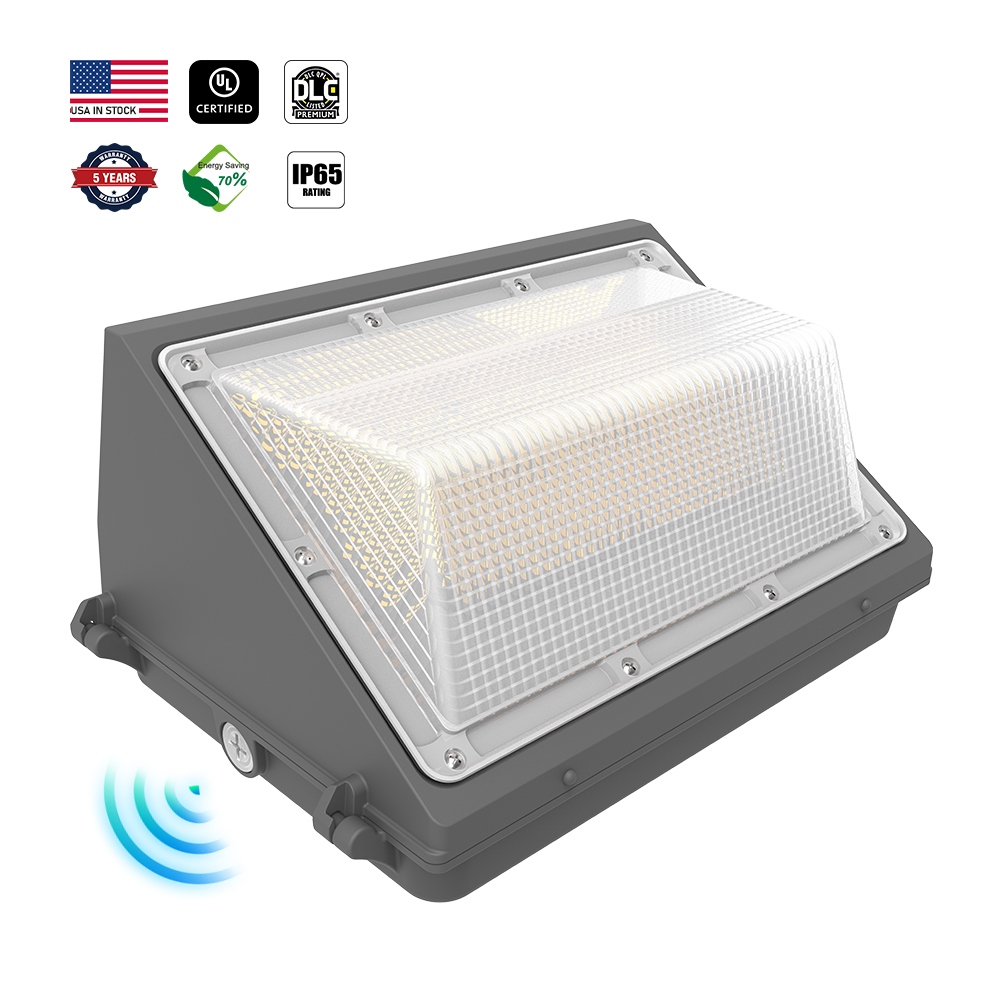
Commercial building exteriors expose lighting fixtures to rain, dust, humidity, temperature fluctuations, and physical impact on a daily basis. Wall pack LED lights engineered for commercial use are commonly rated IP65 or higher, meaning the housing fully resists dust ingress and protects internal components against direct water jets from any angle. This level of protection ensures wall pack LED lights continue operating reliably through seasonal weather cycles without seal failures or premature component degradation. The robust die-cast aluminum housings typically used in wall pack LED lights also provide effective thermal management, drawing heat away from LED chips and extending operational life even in warm climates.
Impact Resistance and Structural Integrity
Wall pack LED lights designed for commercial exteriors are built to withstand physical contact, wind loading, and vibration from nearby machinery or traffic. Unlike glass-envelope HID lamps that shatter on impact, wall pack LED lights use solid-state light sources protected within impact-resistant polycarbonate or tempered glass lenses. This structural resilience reduces the likelihood of sudden fixture failure caused by environmental stress. Property managers who install wall pack LED lights in high-traffic zones, near loading docks, or in areas prone to debris appreciate this durability because it reduces both safety risks and unplanned replacement costs.
Smart Controls and Lighting Flexibility
Dimming and CCT Adjustability
Modern wall pack LED lights increasingly support dimming functionality and adjustable correlated color temperature, often abbreviated as CCT. Dimmable wall pack LED lights allow facility operators to reduce output during low-traffic periods, cutting energy use further while still maintaining a safe minimum illumination level. CCT-adjustable wall pack LED lights give property managers the ability to select warmer or cooler light tones depending on the application — a warmer tone may be preferred near building entrances while cooler, higher-kelvin wall pack LED lights may be more appropriate for security-focused zones such as parking perimeters. This flexibility means a single model of wall pack LED lights can serve multiple exterior zones efficiently.
Motion Sensor Integration
Wall pack LED lights equipped with integrated motion sensors represent one of the most practical upgrades available for commercial exterior applications. When motion sensor-enabled wall pack LED lights detect no activity, they dim to a preset low-output standby mode, then instantly return to full brightness when a person, vehicle, or other movement is detected. This behavior delivers significant additional energy savings beyond the base efficiency of wall pack LED lights, since periods of inactivity on loading docks, rear parking areas, or side entrances can account for several hours each night. Motion-activated wall pack LED lights also create a deterrence effect for unwanted activity, enhancing the security value of the overall exterior lighting system. The instant-on characteristic of wall pack LED lights — with no warm-up delay unlike HID fixtures — is essential for this sensor-triggered operation to function effectively.
FAQ
What wattage range is typical for commercial wall pack LED lights?
Wall pack LED lights for commercial exteriors commonly range from 20W to 120W, with the appropriate wattage depending on mounting height, coverage area, and required lumen output. Facilities with high mounting points or large coverage zones generally select higher-wattage wall pack LED lights, while lower-output models suit recessed entries or accent positions along building facades.
Are wall pack LED lights suitable for 24-hour operation?
Yes, wall pack LED lights are well-suited for continuous 24-hour operation due to their solid-state construction and efficient thermal management. Unlike HID lamps that degrade rapidly under extended cycling, wall pack LED lights maintain stable lumen output over long continuous-use periods. Facilities that require round-the-clock exterior illumination, such as logistics centers or hospitals, regularly deploy wall pack LED lights in always-on configurations without significant accelerated wear.
How do wall pack LED lights compare to traditional HID wall packs in total cost?
Wall pack LED lights typically have a higher initial purchase cost than legacy HID wall packs, but they deliver a substantially lower total cost of ownership. The energy savings and reduced maintenance frequency of wall pack LED lights generally result in a payback period of two to four years, after which the ongoing cost advantage continues for the remaining lifespan of the fixtures. Over a ten-year operating horizon, wall pack LED lights consistently outperform HID alternatives in total financial terms.